Blog %

There has been much discussion raised about "Why are women leaving Architecture? and more broadly, Why is the profession losing key talent?"  Both women and men practitioners are disillusioned by the myth of work/life balance: Women are grappling with "have it all" expectations of juggling family time with the demands of full-time work.  Men are struggling to support their families solely on an architect's salary and fall back on asking spouses to maintain their jobs. The lack of affordable childcare and high cost of living only magnifies the challenges.  How did we end up in this modern family dilemma? What can we do to improve the situation?

How does going to a Hackathon make re-entry easier?

by Lucy Irwin

I am one of those women who was passionate and determined to be an architect.  Who powered through grad school, worked hard at my internship, achieved licensure, and worked on the A team. I loved being an architect. But after my 3rd child was born, I stepped off the career track; every year thinking, “next year I’ll get back on track.” I kept my California License current, never separating my identity from that of the passionate architect. But years piled up.

I launched three children, and now, I can devote myself to my first love, practicing architecture. In December I rejoined the AIA and found Equity by Design.  What a stunning group of smart, action-oriented, creative problem solvers – the A Team! Through informational interviews with architects in the Bay Area, I am figuring out where my skills and passions align with the current practice of architecture.  

Living close to Silicon Valley, we learn about new technologies almost by osmosis. Architects are fighting for every project they get, and doing things the same old way just does not cut it anymore. Companies like IDEO and Google are using technology and design thinking to solve problems, and we architects need to adapt to changing technologies and opportunities. When I found out that Equity By Design was sponsoring a hackathon at the AIA Convention, I was excited to join in and try my hand at this creative problem solving process.  

In the hackathon, it was inspiring to meet a room full of people, passionate about changing the practice of architecture, and making it relevant to the 21st Century.  Instead of being fed information, we created new knowledge by sharing our insights and experiences, hacking the pinch points in the practice of architecture.


Our group “hacked” the subject of how architects can relaunch after taking time away from the profession, and how to present returnees as an asset to firms.  We started with defining the problem:

What makes it difficult to return and how do we encourage/support those returning to Architecture?

Liability to Asset    

Some of the factors that make it difficult to return to the profession of architecture are the challenges of staying current, the narrow perspective of what architecture is, the competitive nature of architecture and architects, and the confidence conundrum.  We considered the fact that once a person is trained as an Architect, they continue to see the world through an analytical, creative and problem-solving lens.  While time away from a conventional office setting may be seen as a liability, it can provide an opportunity to develop other skills such as leadership, focus, entrepreneurship, a deeper understanding of client needs, and project management, as well as developing connections to the community.  
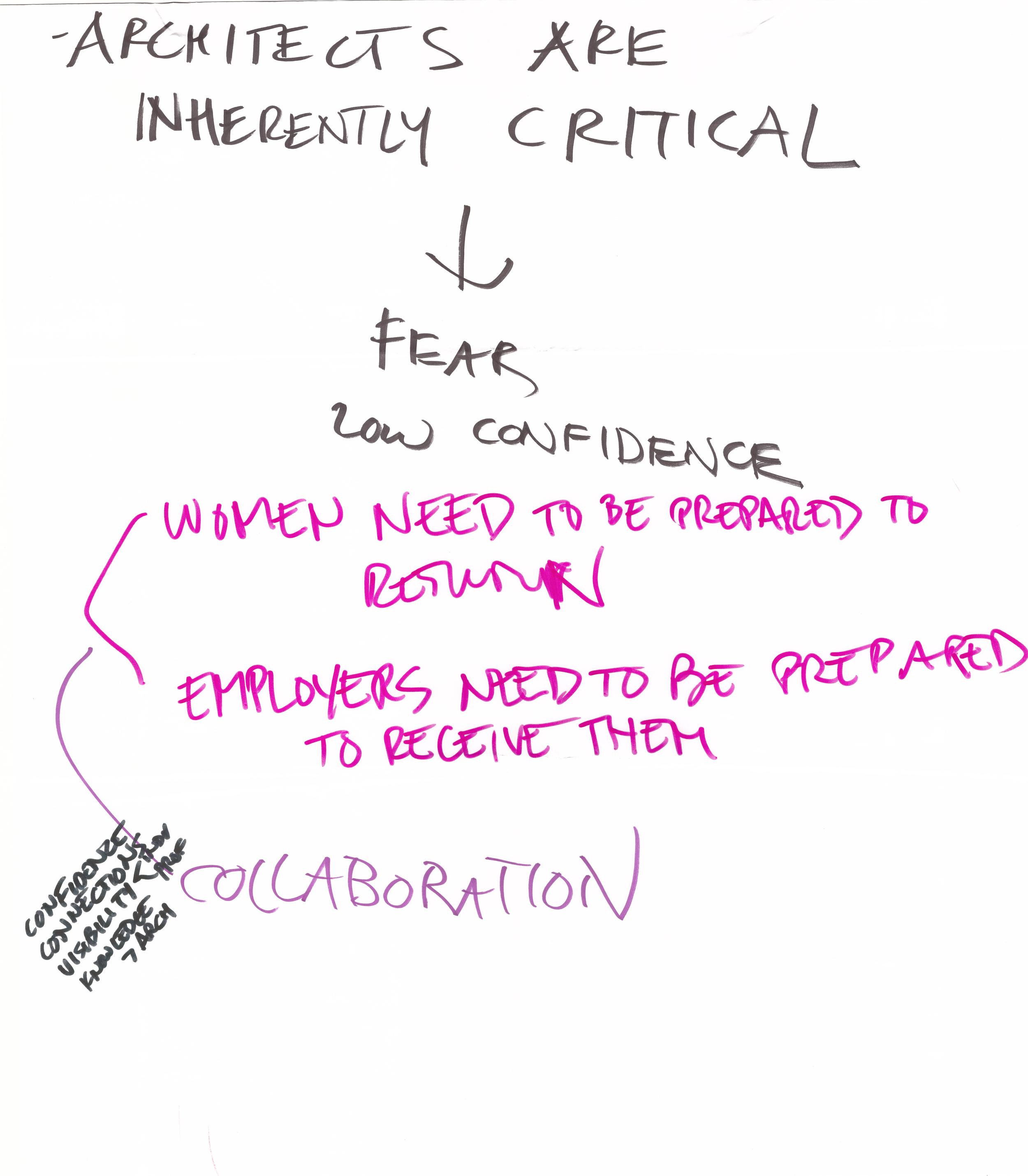
We also discussed a challenge the profession is still battling; the lack of understanding by the general public about what architects do. We saw an opportunity for the profession to leverage the voice of those who are not actively practicing in a conventional firm. For these individuals to be ambassadors to the public; to demonstrate how architects innovate, to think strategically, and to add value by creating more productive environments.  


Our Hack

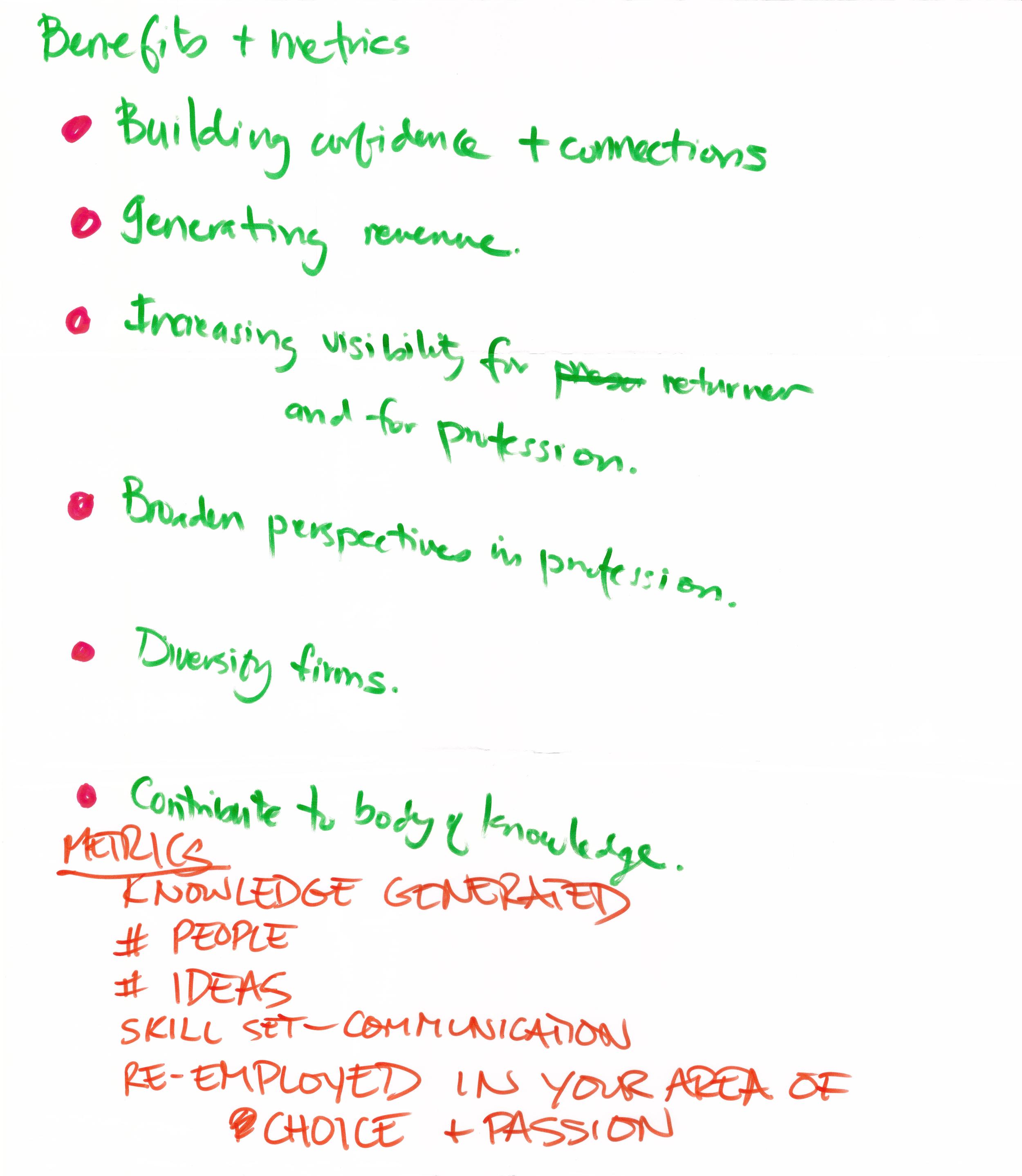
Throughout history (We can thank the French for this one)  “Salons” have provided an environment where members meet regularly, with a variety of stakeholders, to present research or projects to one another. At our hack we discussed how the forum of the salon would provide a great entry point for returnees. The salon offers a deadline, an audience and the opportunity to develop communication skills. The benefit to the individual is a structure to present in front of an audience; the benefit to the audience is an opportunity to gain new knowledge, network, develop camaraderie and broaden insights. In hacking the “Salon”, we can create communities which support and challenge returnees to share an area of expertise, and build confidence in their ability to present their ideas publicly. We imagine these salons including not only architects, but also allied professionals and community members who are interested in understanding how architects enrich the built environment. Potential employers/clients could see an individual in action, presenting design and research, showcasing their skills, approach and talent.

There are a number of key performance indicators we recommend analyzing to determine if salons are an effective tool for encouraging and supporting returnees:

  1. number of people who participate in the salons
  2. number of presentations
  3. number of new clients generated
  4. amount of knowledge generated
  5. number of people re-employed in their area of choice and passion
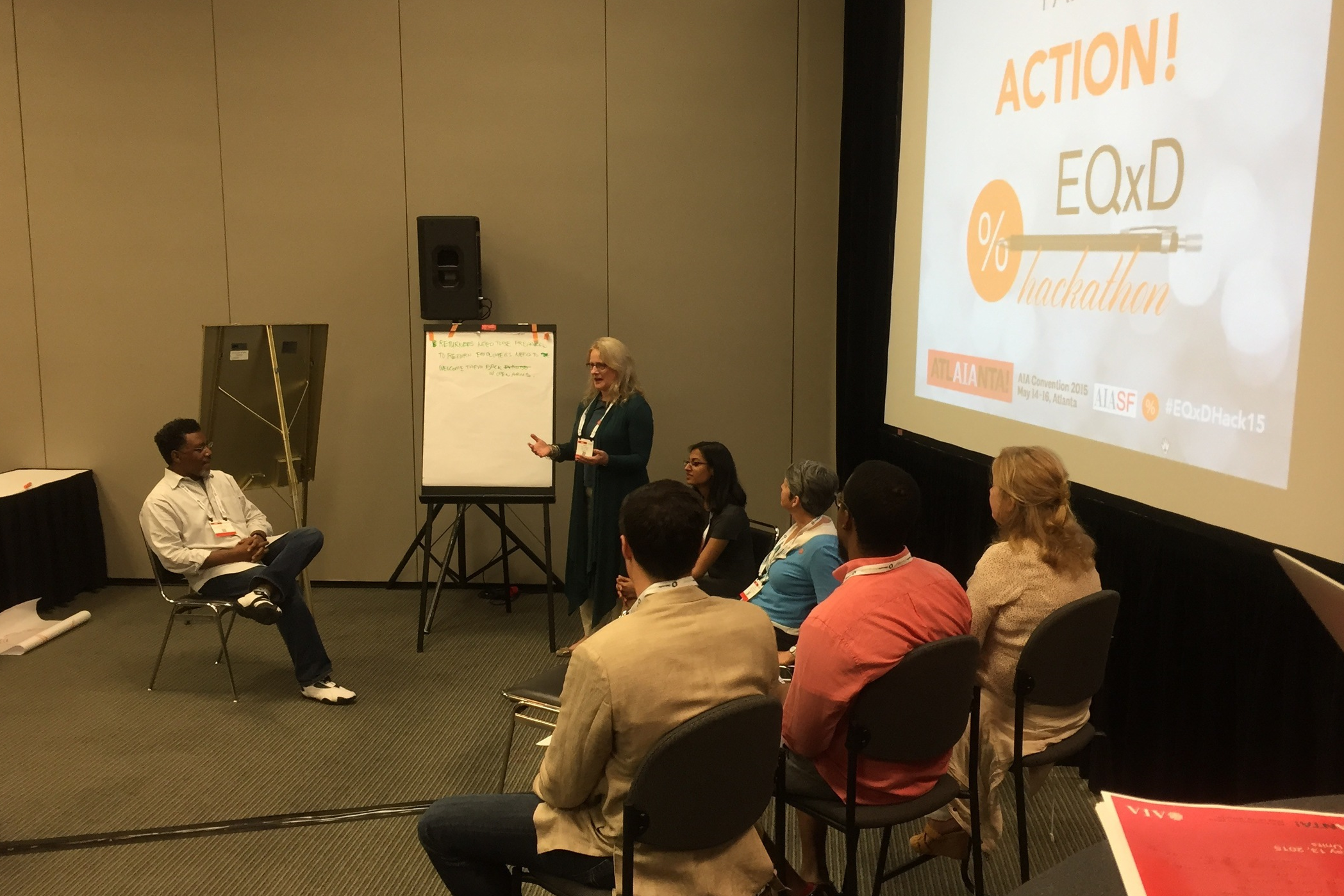
The Salon concept for Returning Architects presented by Nancy Alexander for the team.

The Salon concept for Returning Architects presented by Nancy Alexander for the team.

As promised, time flew by, and before we knew it, it was time to come up with a pitch.  Ours was not as catchy or pithy as needed to win the hackathon, but I certainly won new skills and insights in the process. It was exciting to watch the other groups present their hacks, and the message of the winning team, is a valuable message for surviving any of the pinch points in your career: #BuildYourTribe.

The hackathon was part of that warm welcome back to architecture, Lilian Asperin Clyman has been talking about.  New technologies allow people to work remotely, collaborate, and build teams across geographical, cultural and temporal boundaries.  But some activities are still better in person, and a hackathon is one of those in-person events, where individuals can learn from each other, test ideas, and find out what resonates.  

I’m looking forward to my next opportunity to hack.  My first hackathon was a chance to use my design thinking skills in a fast paced collaborative environment and learn from a diverse group of architects and other allied professionals.  I came away from the event inspired to build my tribe as I relaunch my career.  Maybe I’ll even start a salon!  And next time I hack, I’ll be more confident presenting my ideas, using some of the techniques I saw in action. Maybe I’ll even use a hashtag, take a few selfies and tweet you the results!  

Meaning & Influence: Returning to Architecture

Team Members

  1. Lucy Irwin
  2. Nancy Alexander
  3. Jayshree Shah
  4. M. von Nkosi


What's next for EQxD?

Join us in San Francisco at AIASF on June 11th for our next EQxD "U" Workshop "What's Flex got to do with Success?" (Win Win Strategies for Work/Life Flexibility) Meet the panelists, and participate in small group break-outs to "hack" what works for flexibility in the modern workplace. This event is relevant to all AEC professionals! 6pm-8:30pm. 

ATTEND WORK/LIFE FLEX 6/11 AIASF


I’m not an Architect...

by Karen Robichaud

I am not an architect and, I don't event play one on TV! 

I majored in English and minored in Theatre Arts. When I graduated I had no clue what to do with myself or how to build a career out of my interests and skills. Eventually I stumbled into graphic design and communications for an architecture firm. This gives me a different perspective on how firms operate, how equity fits into that and what they can do. Because of my liberal arts background I’m always trying to connect issues and ideas across disciplines. Before I arrived in Atlanta for the Equity by Design Hackathon, I read the course materials, but I also revisited some of my favorite pieces that have taught me to broaden my perspective and deepened my understanding of how different people understand the world. Sometimes revisiting a favorite piece better clarifies my ideas or reminds me of a great way to phrase a thought. I too need to step outside myself and listen. I read through a few of my favorite passages from Roxane Gay’s Bad Feminist, re-watched Chimamanda Adiche’s TedTalk, “The Danger of a Single Story” and pulled up one of my long-time favorite essays “Yes, You Are” by Sarah D. Bunting about feminism. Each of those pieces inspires me and prompts me to think about what I can do and share to help “eat the equity whale.”

Walking in to the Hackathon, I had no idea what to expect from the experience. After all, I’m not a hacker and I’m not an architect! I left feeling inspired, excited and eager to implement hackathons everywhere. There’s so much to hack! As I listened to the introductory remarks and comments before we broke into small groups, I had an idea for something I’d like to hack specific to the equity movement. I was struck by the importance of language. I care deeply about how we use language and the meaning of the words we use (which is part of why “Yes, You Are” appeals to me). In the context of the Equity by Design discussion, I was struck by when and how words like male, female, man, woman and girl were used. I never heard anyone utter an equivalent of “girl.” In the session I heard a few people say “girl” when they should have said woman and I never heard that happen with “boy/man.” It’s a small thing and it’s subtle, but the longer we perpetuate the use of “girl” when we mean “woman,” the clearer it is that issues of equity and perception run deep in our social constructs.

I admire the research and dialogue the Equity by Design effort has cultivated, but I think a big piece of the puzzle is education on a broader level. How do the issues facing architecture mirror those facing other industries? We need to talk about what’s going on in our society at large for different groups to better understand how and why biases play out in the workplace. When we talk about the cultural ideals reflected in the media and pop culture, we better understand why it’s so deeply ingrained in our subconscious that it’s “bad” for women to exhibit assertive behavior. I think unlocking some of that is key. Many other industries suffer from the same gaps in diversity and if we have larger, interdisciplinary discussions that support and inform industry specific conversations, it becomes possible to move the ball forward on multiple fronts.

The Hackathon reminded me how important it is to listen, challenge assumptions and push outside my comfort zone. I want to keep talking about equity, draw parallels to other disciplines and elevate the conversation so we’re not working in a bubble. I want to find ways to help people see the challenge from many angles so that we’re all hear each other better.

We need to listen and we need to share stories fearlessly.


What's next for EQxD?

Join us in San Francisco at AIASF on June 11th for our next EQxD "U" Workshop "What's Flex got to do with Success?" (Win Win Strategies for Work/Life Flexibility) Meet the panelists, and participate in small group break-outs to "hack" what works for flexibility in the modern workplace. This event is relevant to all AEC professionals! 6pm-8:30pm. 

attend work/life flex june 11


We need to Hack more!

by Matthew Gaul    

Without a doubt, the most significant event of the whole AIA National convention in Atlanta was Equity by Design (EQxD) Hackathon ½ day event. Unique to the convention we were going to do something, on the spot, to improve the profession. The whole afternoon was a microcosm of what I have experienced since I attended my first EQxD meeting a year ago. What I got out of it was a real sense of what it will take to move the profession forward and an even stronger sense of optimism that we will get there.

Why I went:

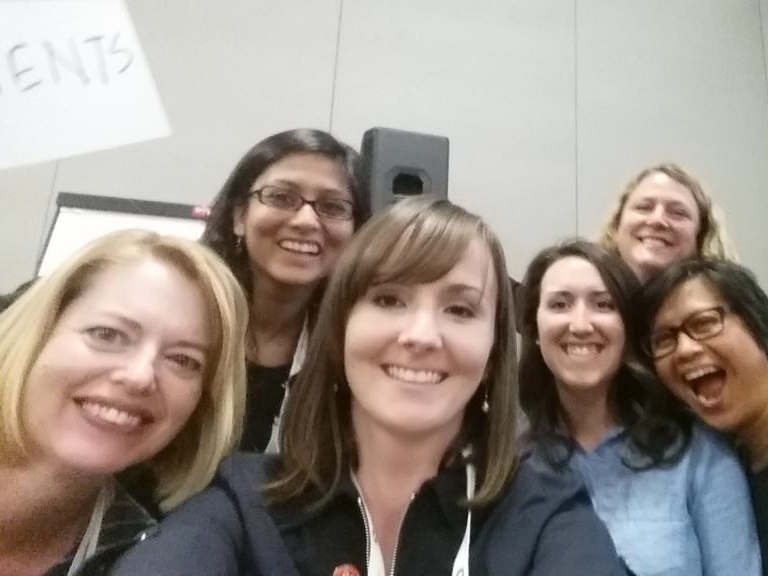
First stop: a selfie at the front door.

First stop: a selfie at the front door.

Like all EQxD events and meetings I’ve been to, the Hackathon was about awareness and action. Action is the key to causes. Architecture is keen to action when it comes to external things like the 2030 Challenge for sustainability, but we’re ironically inactive about our own internal challenges.

At the Hackathon, we set out to focus internally, not on our desires about design as architects are regularly accused of doing, but on our self-worth and conduct. Frankly, it is still a significant thing for the profession to stand up out of our sandbox of beautiful designs, to grapple with real human issues. I believe doing so helps us realize our true value and prepare for a Post-Green world, when being sustainable will be as much of a concern to the public and the profession as being accessible and ADA compliant. When we get there, we’ll be left with our one common denominator: our fellow humans for whom we design. After all, Architecture can’t sustainably focus on sustainability because we’ll get there, and when we do, we’ll be left with our one common denominator: our fellow humans for whom we design.

I also wanted to be there to be one of the men in the room. Everyone has potential for implicit bias, groupthink, and ignorance. Research shows us that diverse groups make more intelligent and equitable decision through a reduction in assumptions and increase in experiences and awareness. So, by participating help mitigate these factors in myself and others.

How it went:

It was hard. Not in the typical architecture-is-hard because the problems are complex and take a long time to develop solutions. It was hard because we didn’t have a long time to figure things out, and we couldn’t use our typical problem solving methods. We were actively figuring out what our methods could be while using them to solve our group’s chosen equity issue, and then presenting in a way that we were totally unaccustomed. And that’s the essence of a hackathon.

In the end, this was the most focused, participatory, and fruitful four hours of the whole convention. Don’t get me wrong; other convention activities had the same high qualities, but none produced original work on the spot and drew upon their participants to act in the present and future in quite the same way. We all left with a feeling of community, ownership, and responsibility.

What I take away from it:

“A pocket full of change.”

“A pocket full of change.”

Equity in Architecture and improving the value proposition/understanding of architecture is going to be a lot harder and more complicated than I thought. It isn’t just a matter of sharing information, straightening up, rallying others to action, and changing what others do or think. There is a lot of hard work in figuring out how and what we are doing to change ourselves as a profession and how others perceive us.

Personally, I will make it a point to draw on others more. (It won’t be just to spread the good word of equity, but it will also help shape the bricks that we will use to build a better profession. It is my hope that AIA National does the same.

There is a real value in every single person’s time and energy, because they can shape the course of events and the profession that shapes humanity’s built environment.

And who wouldn’t want a part of that?

Read more of Matthew's thoughts on the importance of equity in architecture from an excerpt of his EQxD Hackathon scholarship essay below. 
 

I believe that Architecture fundamentally needs to raise its internal and external valuation to reflect the importance of architecture in the daily lives of people, society, and the future of humanity. This improvement of valuation has to start with better, more equitable practices within the profession. Once we value ourselves better in this way, provide greater opportunities to our members, and retain more talent, we can better communicate our value to society, and achieve a level of regard and compensation that will enable us to produce our best work.
— Matthew Gaul


What's next for EQxD?

Join us in San Francisco at AIASF on June 11th for our next EQxD "U" Workshop "What's Flex got to do with Success?" (Win Win Strategies for Work/Life Flexibility) Meet the panelists, and participate in small group break-outs to "hack" what works for flexibility in the modern workplace. This event is relevant to all AEC professionals! 6pm-8:30pm. 
Attend work/life flex June 11


Promotion and Advancement: How to champion the Pull.

by Mike Davis, FAIA

Japanese gardeners use a small hand saw called a nokogiri. Cool thing about this tool? Instead of pushing on the blade, it cuts when you pull it.

Thanks to the Missing 32% Project: 2014 Equity in Architecture Survey findings, we know that very few women become principals or owners in US architectural firms. With this deficit front-of-mind, putting pressure on all architects to recognize and act on gender inequity is right. Creating pathways to leadership for women in architecture is critical. But that pressure – the equity push – may not in itself solve the problem in time to keep more women from giving up on the profession.

To make change happen urgently, we also need a complementary force. Call it … the pull.  

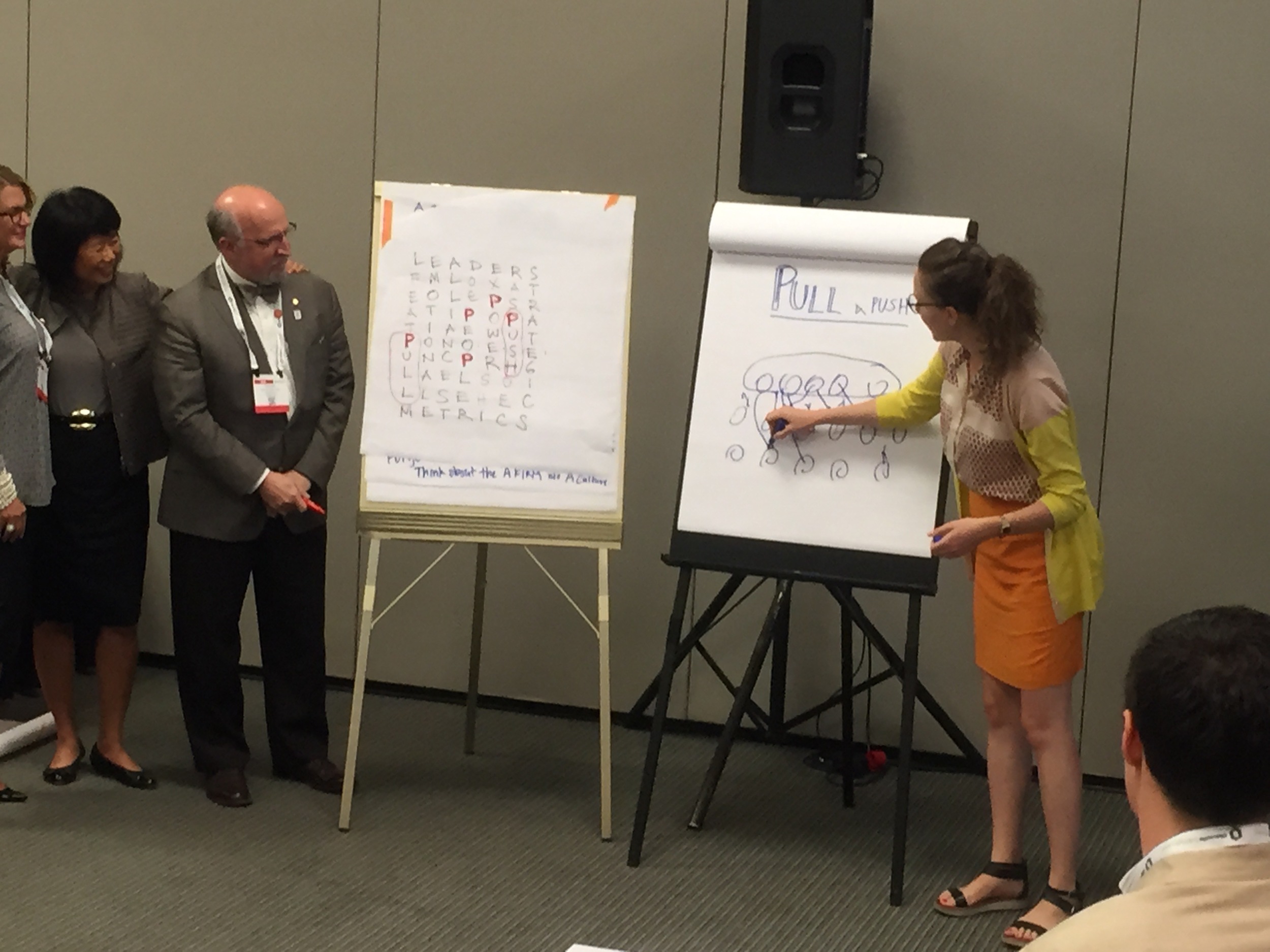
Defining the challenges with promotion and advancement in Architecture. 

Defining the challenges with promotion and advancement in Architecture. 

When your breakout topic for the Equity by Design “Hackathon” at the 2015 AIA National Convention is “Promotion and Advancement”, it becomes a question of how. How do we create the pull for promotion and advancement? What would convince the people – mostly men – running US architecture firms that having more women in senior leadership positions is vitally important?

We can make the business case for equity. 1) Studies prove the correlation between inclusivity on a corporate board and organizational profitability. 2) We have market research showing how much global spending is now being controlled by women. 3) And how about that Harvard Business Review report that says teams with more women on them are just smarter? We can argue the intrinsic value of diversity. We can opine that social intelligence – the sine qua non of 21st century enterprise – is stronger in women. Plenty of compelling evidence.

But in order for gender equity to happen any time soon, the men in charge of our firms need to change their behavior. Men-in-charge are the leverage point in the system as it currently exists. So to “hack” the system, men must be made part of the solution.

Speaking as a male Principal in an architectural firm, I’ve been in the conference room when candidates for promotion and advancement are being considered. Qualifications, talent, dedication, leadership, professionalism? Sure. All those factors are considered. But the thing that ultimately makes a bunch of architects decide to promote someone else to Principal? Trust.

Trust ultimately creates the pull for promotion. Not rational argument, not compelling evidence, not market studies. It’s not an intellectual decision. It’s an emotional one.

We know that there are men out there who want to see women succeed in architecture. And we know trust is contagious. So the Equity by Design Promotion and Advancement “hack” is: the formation of strategic intra-firm partnerships.

A strategic partnership would begin like this: Women, find advocates among your firm’s current Principals or senior leadership. Asking someone for advice is powerfully motivating. Engage them in candid conversation about mutual goal-setting, professional objectives, career paths. Be sure you frame your aspirations in terms of how the firm can also benefit. This is the basis for interpersonal trust in a corporate setting.

And if you can’t find those advocates at your current firm, get your resume in circulation.

Team members including Jessie Turnbull, Mike Davis, Meg Brown and Frances Choun pitch The Pull for Promotion and Advancement. 

Team members including Jessie Turnbull, Mike Davis, Meg Brown and Frances Choun pitch The Pull for Promotion and Advancement. 

The next step: understanding that a firm’s corporate values and behaviors derive from the values and behaviors exhibited by its Principals, the advocating Principals need to demonstrate their trust in the candidates to the rest of the firm. This could take the form of delegating authority for certain corporate activities or functions and then visibly supporting the candidates’ decisions.

In systems-thinking terms, the advocating Principals would be creating a reinforcing feedback loop. As more firm leaders witnessed this support, more would be inclined to extend their trust as well. The pull would be present. Promotion and advancement would follow.

Rather than relying on the interpersonal ju-jitsu of office politics, something more like mentoring is what creates lasting and mutually-beneficial trust. Eventually, this kind of exchange would also create a support network and a culture of open dialogue about professional development in the organization. And then, not only would gender equity and ownership transition be served, but a firm’s capacity to respond and adapt to unforeseen future challenges would also be strengthened.   

Japanese gardeners use a small hand saw called a nokogiri. Cool thing about this tool? Instead of pushing on the blade, it cuts when you pull it.

Japanese gardeners use a small hand saw called a nokogiri. Cool thing about this tool? Instead of pushing on the blade, it cuts when you pull it.

Strategic partnerships can build trust. And trust can create the pull for promotion and advancement. Like the nokogiri, pull works. 


Team Members:

  • Mike Davis, FAIA Bermeyer
  • Frances Choun, VP of McCarthy Building Companies
  • Meg Brown Principal, Perkins + Will
  • Jessie Turnbull, RA Associate, Robert AM Stern
  • Randy Seitz, Principal, AIA Blue Ridge Architects


What's next for EQxD?

Join us in San Francisco at AIASF on June 11th for our next EQxD "U" Workshop "What's Flex got to do with Success?" (Win Win Strategies for Work/Life Flexibility) Meet the panelists, and participate in small group break-outs to "hack" what works for flexibility in the modern workplace. This event is relevant to all AEC professionals! 6pm-8:30pm. 


When Working Hard Hardly Works

by Morgan Maiolie

I killed it in college. I worked hard and late and I loved every moment of my six-year master’s program. When I walked through the door to my first job I was energized. I thought I’d excel.

I was wrong.

It took time to see it, in part because I’d been warned about the life of an intern. I was ready to work humbly over many years to prove myself and transition without complaint from engaging academic work with a flexible schedule to less creative work that demanded inhabitation of a single chair for 8 contiguous hours, often many more. I willingly sacrificed personal goals and health for my job. During these first years, I didn’t let many things divide my focus, least among them a discussion of women in architecture. I was confident in my ability to overcome any lingering sexist barriers simply by being good at my job and working well with my peers. I would be awesome. People would like me.

Normal
0


false
false
false

EN-US
JA
X-NONE


 <w:LatentStyles DefLockedState="false" DefUnhideWhenUsed="true"
DefSemiHidden="true" DefQFormat="false" DefPriority="99"
LatentStyleCount="276">
<w:LsdE…

Morgan studying daylight design in college, analyzing famous buildings, learning construction skills, and working late into the night.

The author studying daylight design in college, analyzing famous buildings, learning construction skills, and working late into the night.

I began to reassess my worldview when I noticed the few older women around me occasionally excluded and too often the victims of veiled disrespect. Closer in career development to me, I saw young mothers ceding their part-time schedules, fired, or exhausted by overwork. I began to realize that, to keep my career on track while raising a family, I would need exactly what these women were denied.

It looked like every office operated this way, so I started to float a few questions, “are there other firms with more flexible schedules? more female leadership? less overtime?”

Resoundingly, the answer was No.

There was a bit of shame in my asking as well; why would I think of my needs when I should focus on the design of sustainable, resilient buildings that improve my community? My answer is that, as I write this, young women like me are training very hard to become architects. We deserve a work culture that supports us in achieving our sustainable, resilient, community-minded goals, not the culture of today where only 17% of our female peers hold an architecture license. I don’t believe our profession can afford to lose us.

I was interested in the Equity by Design mission enough that I wrote a scholarship essay and spent another 8 contiguous hours in a single seat (this one in my car) to travel to Atlanta. There, I found what I was looking for. Gathered in conference room B304 were a group of men and women committed to a new model of work, supportive of female architects and unafraid to speak frankly about the specific issues they face. Our organizers employed a hackathon structure where participants created solutions in a fast-moving, stream-of-thought design process; an activity for which we were well-trained and enthusiastic. Our work product showed the structure’s success; each team’s hack added more to the understanding and rehabilitation of architectural culture than many years of single conversations in quiet offices could have.

Breaking the 9am-5pm cycle.

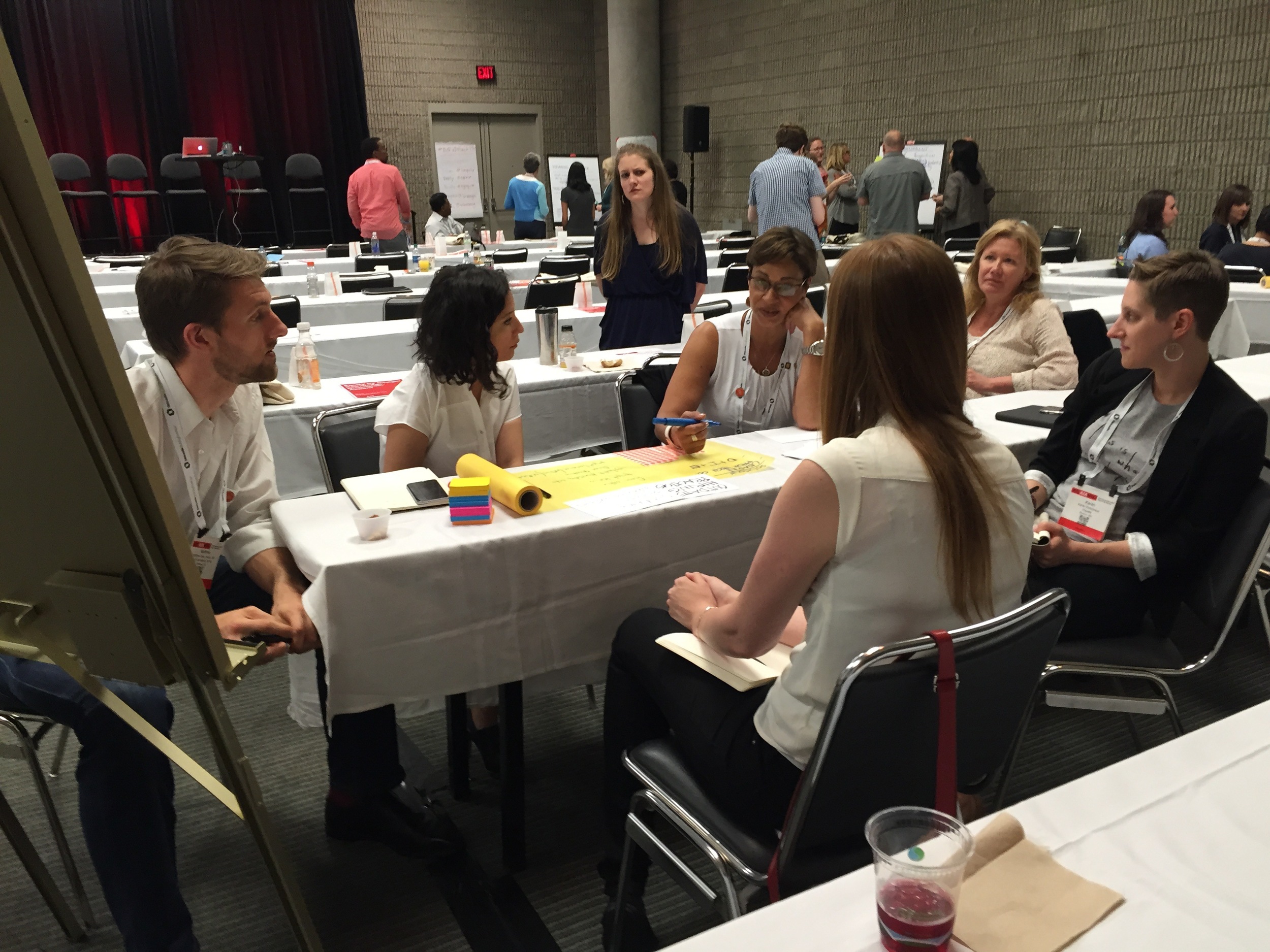
Our team, Phil Bernstein, Melissa Daniel, Ashley L. Dunn, Shawna Hammon and I, addressed the flexible work week. Our goal was to make it possible for any architect to work non-contiguous hours or part-time while remaining a valuable part of their team. We identified barriers and designed “hacks” that we organized into the pillars Culture, Infrastructure, and Process. We crafted our design pitch as a kit of parts. Our intent was that an architecture firm would combine specific hacks from our kit to customize a plan for their unique work style. The Kit of Parts is divided into three categories, each with specific hacks.

Phil Bernstein, Melissa Daniel, Ashley L. Dunn, Morgan Maiolie and&nbsp;Shawna Hammon present to the EQxD &nbsp;Hackathon judges

Phil Bernstein, Melissa Daniel, Ashley L. Dunn, Morgan Maiolie and Shawna Hammon present to the EQxD  Hackathon judges

Our team defined the current architecture system as one that prioritizes long days and the ability to work fluidly, communicating with team members the moment a need arises. To change it, we introduced hacks like core meeting hours, hourly pay to incentivize strategic project planning, and the use of technology to ensure that communication remains fluid when a team member is not physically in the office. We repurposed a technique prevalent in the technology design industry called Agile Development, which allows for independent work followed by quick, strategic critique sessions. Finally, we identified systems for employees to share project responsibilities; increasing communication, flexibility, and trust amongst project teams.

We did it from 1-5pm.

A key strength of the Equity by Design Hackathon was that we focused on these issues with people of equal passion -  our tribe. Working with the Equity by Design group for one day gave me the tools to talk about equity for a year. I don’t float questions anymore. I make statements. I hack.


Read more of Morgan's captivating experiences  from excerpts of her EQxD Hackathon scholarship essay below. Her strong and articulate words encompass frustrations and ambitions many feel about the inequity in the architecture field today.  

In both of my first design positions I experienced institutional practices that negatively and and disproportionally affected women. It was a hard thing for me to talk about in each case because I was just learning the ropes of each job, because I had a lot of respect for my superiors who seemed oblivious to or unconcerned with the negative impact of these practices, and, finally, because architects, myself included, hold a worldview that puts helping our communities above all else. It seemed selfish to talk about my own needs when everyone around me was working so hard for so important a goal.
— Morgan Maiolie
It’s hard for me to believe I could train so hard and end up in and antiquated system that’s as ready to push me out as it is to demand my health and future family in exchange for the ability to improve my community. The way we structure work hasn’t changed since men worked and women stayed home, but it should.
— Morgan Maiolie


What's next for EQxD?

Join us in San Francisco at AIASF on June 11th for our next EQxD "U" Workshop "What's Flex got to do with Success?" (Win Win Strategies for Work/Life Flexibility) Meet the panelists, and participate in small group break-outs to "hack" what works for flexibility in the modern workplace. This event is relevant to all AEC professionals! 6pm-8:30pm. 
Attend work/life flex june 11th

#BUILDYOUrtribe - EQXD Hackathon 2015 Winners

Meaning and Influence: Entrepreneurship

We were told to get ready to eat the whale, to grab our forks and come hungry for action.  We walked into 2015 AIA Convention WE310 - Equity by Design: Knowledge, Discussion, Action Hackathon energized and ready to “hack”.  But what that meant, we weren’t entirely sure at first.  

After the rundown and summary of the key findings from the 2014 Equity in Architecture Survey, wonderfully presented by our personal twitter heroes: Rosa Sheng (@RosaSheng), Lilian Asperin Clyman (@liaspcly), Emily Grandstaff-Rice (@egraia), Virginia Marquardt (@branngin) and Nicole Graycar (@ngraycar), we were told to gravitate towards a topic of interest.  There were 6 topics written up on boards and spread throughout the room.  Immediately our group surrounded the meaning and influence board with the topic of entrepreneurship.   

We were supposed to limit the groups to 5 or 6 people but 7 of us sat down instantly. When asked if any of us wanted to switch groups, we all leaned in--committed to our team and topic of interest.  To quote from The Missing 32% Project blog post Anatomy of the EQxD Hackathon,  

“I have always believed that those who are meant to meet, find each other in due time. Hackers find themselves gravitating towards other folks who share a passion…”  

The EQxD leaders thankfully let us stick together and break the rules.  We quickly discovered we were fortunate to have a variety of experience in our group that consisted of: a recent architecture graduate, a designer on her path to licensure, a newly licensed architect working in a large firm, an entrepreneur turned employee, an employee turned entrepreneur, a private practice employee turned public architect and a non-profit leader advocating for women in leadership.

Step 1: “Deliberate and Discard: Define the problem


Why don’t architects think more entrepreneurially? How do we break the mold and move away from the traditional career path, whether employed in a large firm or going out on our own?  Many issues came up from architects not knowing the business side of the industry to asking how do architects obtain and retain clients to asking, “am I a service provider or an artist?  Time and work-life balance also came up in our discussion, we talked about architecture schools teaching a culture of ‘all-nighters’, and clients not understanding how much time our work takes or the value added by the architectural team.  We asked why profitability is a dirty word in our industry?  As the EQxD leaders had warned us, time flew by and we had to distinctly define our problem; this is what we came up with:

In order to retain talent, increase job satisfaction, and avoid pinch points, we need to think more entrepreneurially – which is actually more true to our authentic selves as creative problem solvers.  By thinking like an entrepreneur, an architect will easily articulate their own value to their colleagues within a firm, or as a sole proprietor, and will likely then be more valued, remain in the profession and achieve more job satisfaction. So why aren’t architects articulating their value, to themselves and to their colleagues and peers? We answered that question as having a lack of knowledge, resources and confidence.

Step 2: “Develop and Clarify”: Diverge, Deliberate, Converge


What are the root challenges? Lack of Knowledge, Resources, and Confidence.  
What can we do to overcome our lack of or perceived lack of knowledge, resources and confidence?  We started navigating towards 6 ‘C’ words – creativity, collaboration, communication, confidence, community and connection.  We need to surround ourselves with other creatives, collaborate and communicate with confidence and engage and connect with our community - both the design community and non-design community.

We kept circling around the fact that we really don’t do it all on our own, we partner with others whether it be our client, the city and/or the community.  We utilize an interdisciplinary approach, peer mentors, and shared resources to get the job done.  How do we make this process of knowledge building, resource sharing and confidence boosting more accessible?  First, BUILD YOU.  We realized you have to know what you are good at.  What are your skills and passions?  This isn’t always easy to figure out.  We must however build ourselves first.  Second, BUILD YOUR TRIBE. We need to find others that have different skills and passions, who challenge us,who help us develop and further our design visions.  We called this building our tribe.  

Step 3: “The Pitch”: Get ready to “sell” it


As the clock ticked by at what seemed like a rapid pace, we realized we needed this to engage the public in order to make a larger impact.  So we came up with #Buildyourtribe, we liked it because it contained #Buildyou, the notion of finding your own skills and passions first and then building your tribe.  

Next, we decided we could go further than just a social media campaign and came up with the idea of an app which would be focused on connecting the AEC community locally, regionally and maybe even globally to participate in events like the hackathon, to meet up, connect and make lasting relationships;  a sort of industry-specific mash-up between LinkedIn and MeetUp.

It was interesting that by the end of this brainstorming session, our concept of building our tribe was coming to fruition through our own group’s camaraderie. We had come from different backgrounds not knowing what truly to expect but had found a common thread to work on and were putting our entrepreneurial self to the forefront.  As a new group of “hackers” we are looking forward to developing the app!

Amanda Gann @amanda_gann
Jamie Molina @jamiemolina419
Neelanjana Sen @NeelanjanaSen
Marilyn Moedinger @mwmoedinger
Karen Bala @karencbala
Kelly Hayes McAlonie @KellyHayesM
Rebecca Johnson @rebeccainphilly


What's next for EQxD?

Join us in San Francisco at AIASF on June 11th for our next EQxD "U" Workshop "What's Flex got to do with Success?" (Win Win Strategies for Work/Life Flexibility) Meet the panelists, and participate in small group break-outs to "hack" what works for flexibility in the modern workplace. This event is relevant to all AEC professionals! 6pm-8:30pm. 
REGISTER FOR WORK/LIFE FLEX JUNE 11th


What the Hack? - EQxD Hackathon and Happy Hour Recap

by Rosa Sheng

One of the most talked about events at the AIA convention in Atlanta was WE310 Equity by Design: Knowledge, Discussion, Action! Hackathon on Wednesday May 13, 2015. The final number of attendees (happened to be 32) varied in age, level of experience and multicultural mix; it was unplanned, but ultimately a model of the diverse and inclusive practice of the future.

Thank you to ARCHITECT Magazine @architectmag for the amazing coverage of the Equity by Design along the way, including the 2014 Survey Final Report and video coverage of the AIA EQxD Hackathon. Special thanks goes to our generous Equity by Design /AIA Convention Hackathon sponsors: Autodesk, McCarthy Building Companies and WRNS Studios for providing this opportunity for the future leaders of our profession. 

For the next 2 weeks, we will be sharing insights and results from the six Hackathon teams (including the winners @BLDYOURTRIBE), the scholarship winners and the jurors Obiekwe Okolo, Melinda Rosenberg and Curtis Rodgers. 

EQxD Hackathon Video by ARCHITECT Magazine

Equity by Design Hackathon at AIA Atlanta Convention May 13, 2015


STORIFY - LIVE TWEET RECAP 

We also captured live tweets from the Hackathon and Happy Hour hoping that it will provide you with a great overview of the day's energy. See if you can spot some familiar faces! At the Happy Hour, we had 70 attendees including our EQxD Hackathon speakers and participants, local volunteer Anne-Michael Sustman, members of AIA YAF, Architalks Blogerati, former AIA National President Katherine Schwensen, FAIA, AIA San Francisco Board Members, a few AIA National Candidates Steve Fiskum, FAIA, Jenn Workman and Haley Gipe, all our friends of Equity by Design from all over the US, as well as new architecture student friends from Georgia Tech .  We would also like to thank our Happy Hour venue hosts at Studio No. 7, Shannon and Earl for their beautiful artist's studio that provided the perfect setting for our event. If you are in Atlanta, please continue to support this local business.

Equity by Design: AtlAIAnta! Convention Recap

by Rosa Sheng

The AIA Convention in Atlanta was a refreshing and unexpected surprise for many with amazing keynote speakers, programs, networking events and opportunities to explore the city. The convention app this year was a great way to get a sense of what was happening elsewhere. The convention theme was IMPACT! and each day, the keynote speakers (featuring Former President Bill Clinton, Welby Atidor, and Julie Dixon) did not disappoint in bringing the message home. In order to advance, we must be seek to change the profession to be more innovative, more diverse in our collaboration, more equitable to represent the populations we serve and become better ambassadors for the value proposition for Architecture.

It was time for many firsts. The profound impact of social media allowed many of our events, such as the first ever Equity by Design Hackathon #EQxDHack15 (WE310) at an AIA Convention to be successful at conveying the message of the equity movement, but also having fun along the way, making new friends and creating connections beyond gender, age, and cultural backgrounds. Our audience in all 3 workshops (WE310, FR117, FR420) where the Equity in Architecture data was presented, consisted of diverse backgrounds and positive participation. There were men and women, new and seasoned, multicultural ethnicities, from all over the nation; the common thread was a desire to see our profession thrive with a commitment to action and the pursuit of equitable practice. All of this is a hopeful indication of the representation we would like to see for the profession in the near future.

Also notable was that many of the people that we had reached out to and met thru social media came together to meet for in person for the first time. It was an interesting conversation about re-inventing the traditional norms of networking (golf outings, fundraising dinners, etc) where many of those in the "social media" architecture and design community that had been conversing for years were meeting in person for the first time.

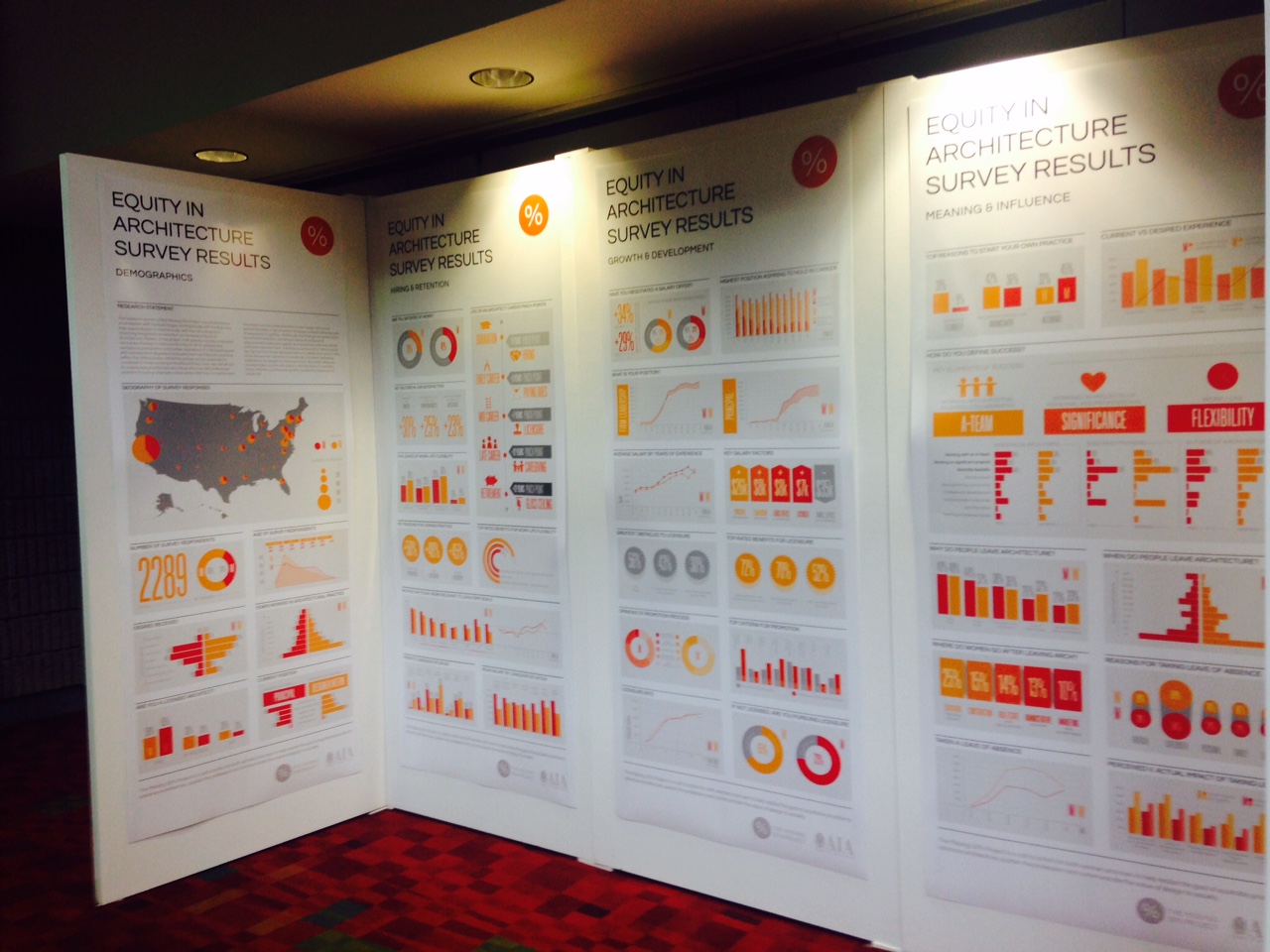
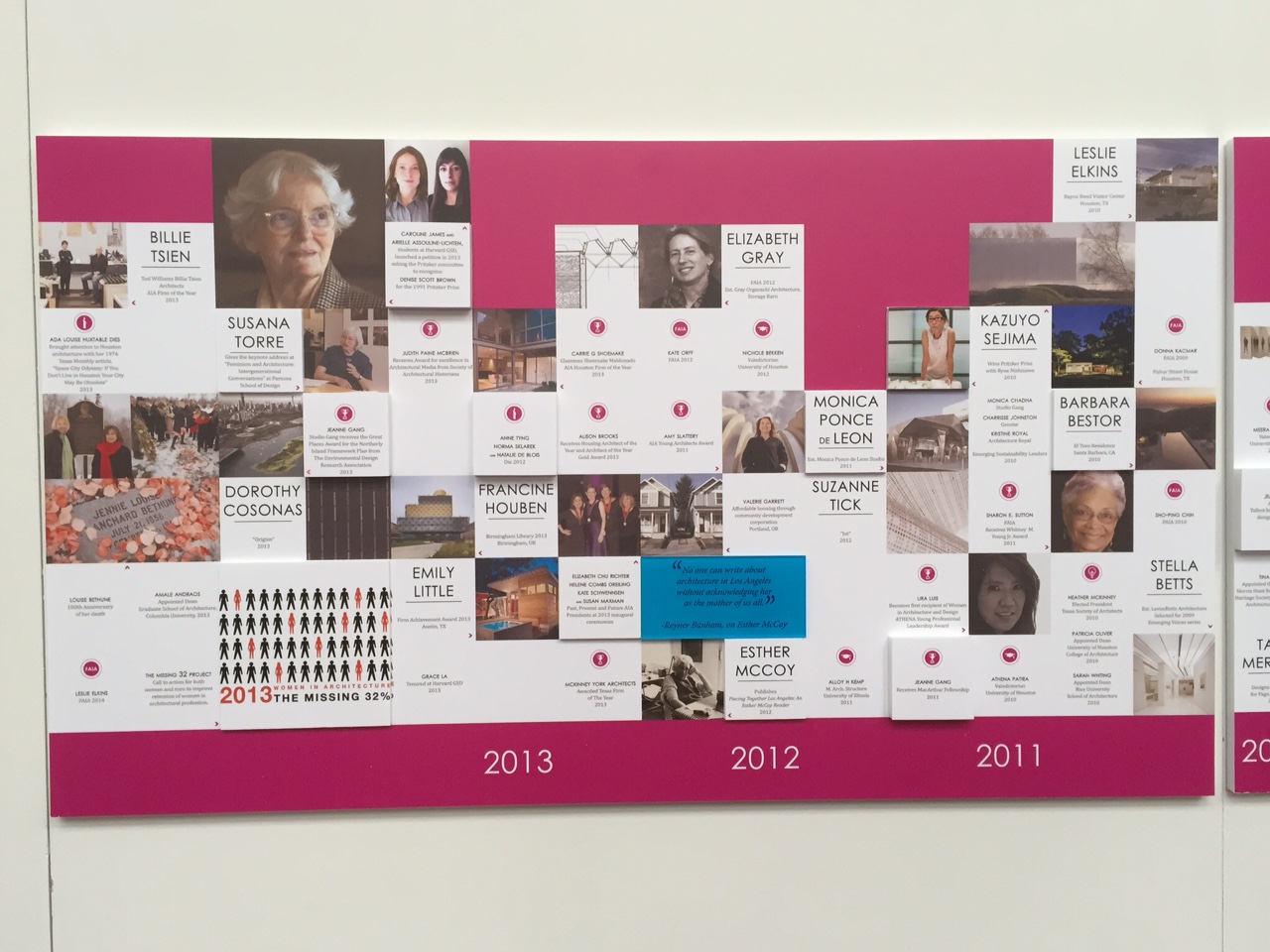
Yet another first, 2 galleries that recognized equity challenges and women in architecture. They were located near each other and facilitated the Equity discussion at convention. The Equity in Architecture early findings infographics were on display outside of B308 with healthy traffic and positive reception. The AIA Houston WIA Exhibit had a traveling gallery version that also had many visitors and discussion. 

The newly elected AIA National officers show promise not only for representing a diverse Board, but also carrying through with the change that the institute needs to remain relevant and impactful in the future. The officers are Thomas Vonier, President-elect for 2017, Stuart Coppedge, Treasurer. Jennifer Workman, L. Jane Frederick, and Anthony Schirripa will serve as Delegates at Large. Additionally, Don King, Thierry Paret, and Deepika Padaam will join them as elected Board members from the AIA Strategic Council. Robert Ivy mentioned Equity by Design: The Missing 32% Project research study as an inspiration for the AIA 2015 Diversity Survey. The early results of the AIA Diversity survey will be presented at the AIA Women's leadership summit in Seattle on September 18: Celebrating Women Leaders, Promoting Cultural Change. 

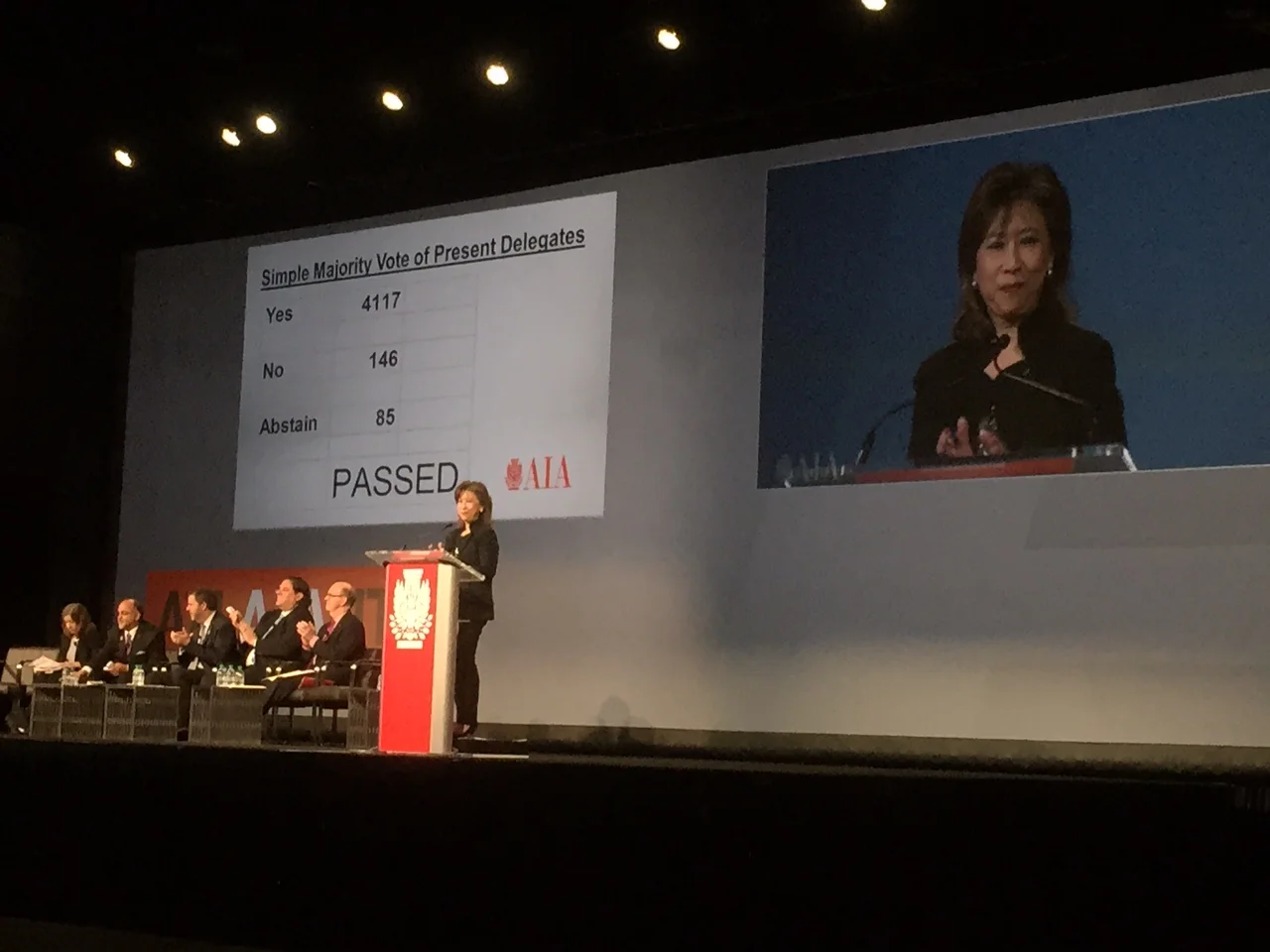
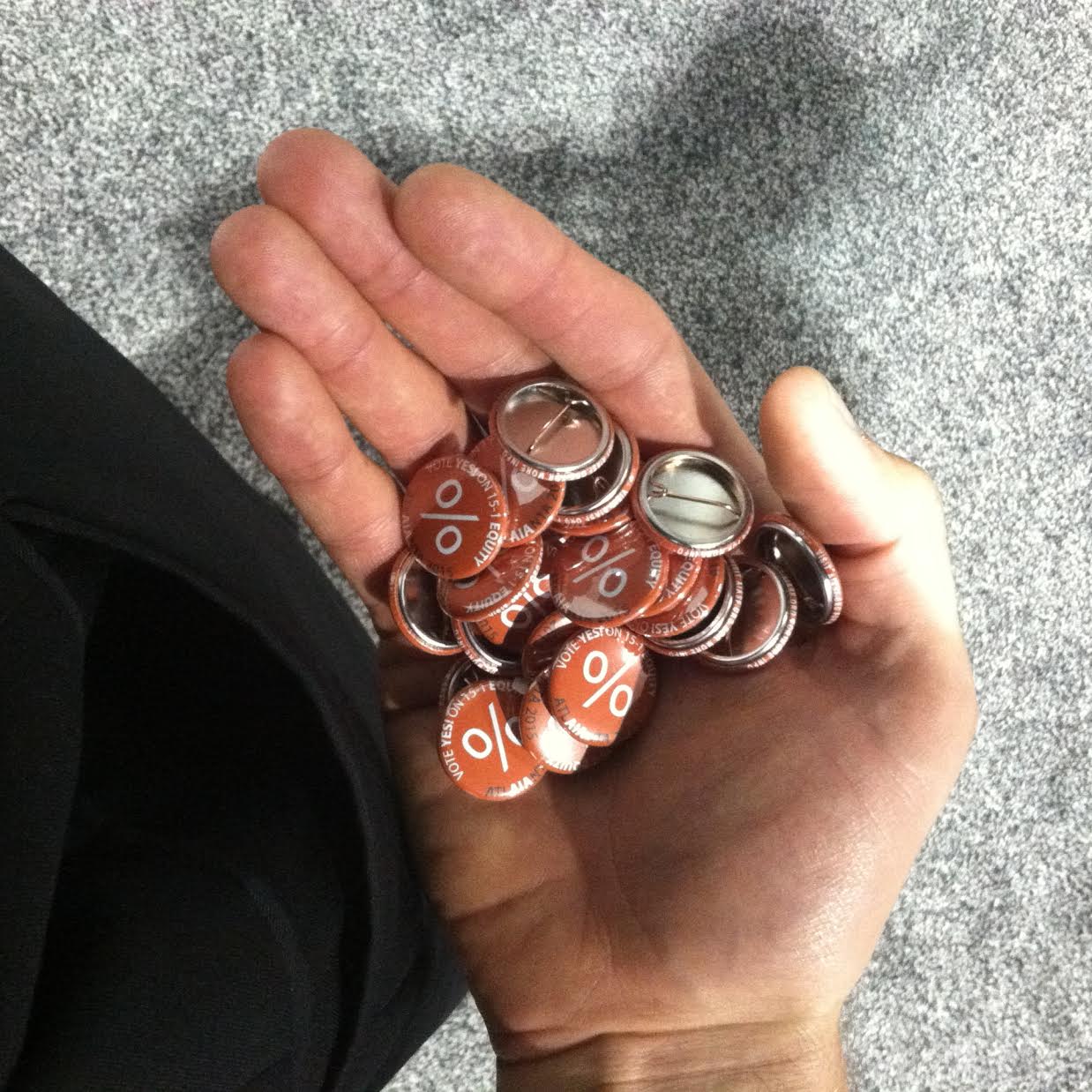
An overwhelming majority voted for Equity in Architecture Resolution 15-1 at AIA National Convention in Atlanta

An overwhelming majority voted for Equity in Architecture Resolution 15-1 at AIA National Convention in Atlanta

Perhaps the most exciting outcome of the convention was the success of advocacy for Resolution 15-1 Equity in Architecture that was co-authored with Julia Donoho, Frank Pitts and myself; co-sponsored by AIASF, AIACC; and supported by the AIA National Board of Directors, Strategic Council, AIA Diversity Council and Big Sibs. The list of supporters goes beyond this base, to all the 4117 AIA delegates who voted in support of the resolution. We are deeply grateful of the solidarity for equitable practice and excited for the work ahead. 

The following Storify link captures the highlights of the 4 days.


Other Sources for AIA National Convention Coverage:

Archispeak Podcasts - 3 special AIA convention episodes. Episode 60 includes a recap of EQxD Happy Hour.

Architect Magazine - Equity by Design: The Missing 32% Project Releases Complete Findings on Women in Architecture

Architect Magazine Video- Promoting Equitable Practice in Architecture

 Architectural Record -  AIA Passes Equity Resolution: Now What?


Equity in Architecture Survey 2014: Final Report

May 14, 2015 San Francisco - The AIA San Francisco Equity by Design committee is pleased to announce the release the Equity in Architecture 2014 Survey Report. The report is available for viewing online immediately and a published version will be available later this year. We have deep gratitude for the generosity of sponsors and equity partners who have supported this important initiative.

While this is a broad overview "road map" of the analysis, there is potential for interpretation and further analysis. Nevertheless, the Equity in Architecture Survey 2014 Report is an effective means to start a much needed conversation. There will inevitably be more questions than answers to understand the findings. Please share this information with your colleagues, firms, alumni networks, and AIA Chapters. 

The research portion of the Missing 32% Project was envisioned as an endeavor with multiple stages, starting locally with the Bay Area, then expanding to the national scale with the ultimate goal of informing the global conversation on the issue of Equity in Architecture. Phase 1 of the project, a 90+ question survey conducted via Survey Monkey in February thru March 2014, explores the workplace participation and career aspirations of 2,289 participants with architectural degrees and experience in architectural practice within the United States. 

The disparity between male and female representation within the profession and limited leadership opportunities have been well documented and are a growing concern. Recognizing a paucity of similar research and documentation of best practices within the United States, Equity by Design’s mission is to supplement this conversation with more targeted information about our local and national community of practitioners.

Equity by Design: The Missing 32% Project

Equity by Design is a call to action for both women and men to realize the goal of equitable practice, advance architecture, sustain the profession and communicate the value of design to society. Our mission is to understand the pinch points and promote the strategic execution of best practices in the recruitment, retention, and promotion of our profession's best talent at every level of architectural practice.

Equity by Design is a committee of AIA San Francisco. The group is made up of a diverse cross section of the industry: participants include both men and women; new graduates and seasoned industry professionals; architects, designers, industry consultants, and those working in allied fields; those without children, parents who have continued to work full time in traditional practice and those who have devised alternative situations to accommodate the demands of raising a family. The group has dual aims. First, we seek to forge strong personal and professional ties amongst like minded individuals. Second, we aim to leverage these connections to achieve progress towards more equitable and sustainable practice across the field.


EQxD Symposium Breakout Recap: What’s Flex Got to Do With It?

by Jenny Guan

Overcommit, others first, do too much.

After-work exhaustion means ramen in bed.

Will day be crazy? Never know!

These are a sampling of six words stories contributed by attendees of the October 2014 Equity by Design symposium breakout session on work life balance: What’s Flex Got to Do With It? Win Win Strategies for Work Life-Flexibility. As we gleaned from the Missing 32% 2014 survey results, this was a topic that affects all in our profession, regardless of gender, years of experience, and firm role. This subject is also one that lends itself to many personal anecdotes, and our session focused on exploring strategies for finding that healthy equilibrium between work and life through the power of the personal narrative.

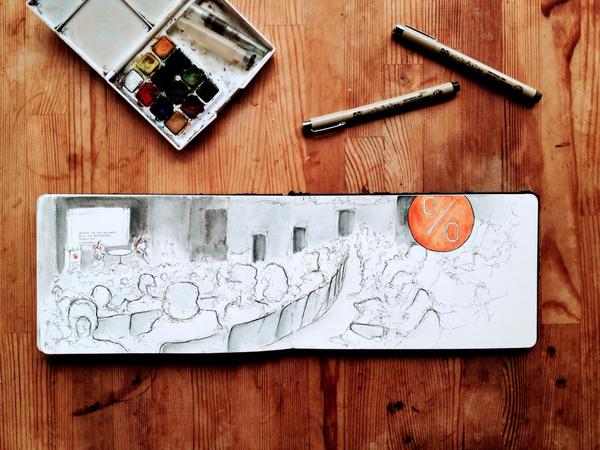
EQxD Symposium Sketch by Jenny Guan

EQxD Symposium Sketch by Jenny Guan

Prior to the symposium, attendees were asked to complete a quick activity: provide two (very short) stories, six words each; one for their relationship to the day to day experience, and one in the context of major life events such as family or medical emergencies, childbirth, or career sabbatical. The prompt also requested volunteers from those those that were interested in expanding on their six words by presenting their experience on stage during the breakout session, forming a springboard for productive dialog.

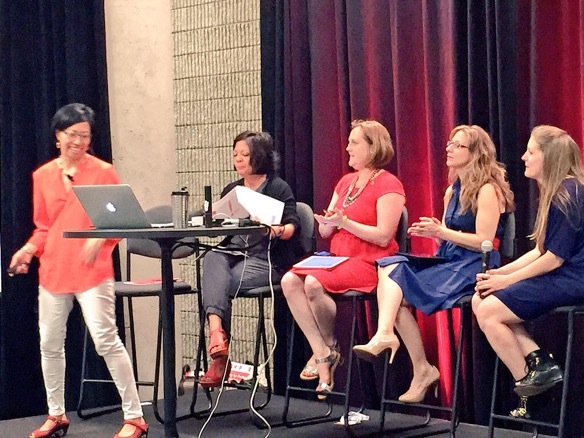
Our panelists, Carole Wedge (principal, Shepley Bulfinch) and Francis Pitts (principal, Architecture+), kicked off the session by sharing their own stories of how they achieve healthy live-work balance in their personal lives and in their practices. Carole emphasized the importance of an enriching life outside the office, while Francis shared how the death of a firm partner’s spouse led to a reevaluation of how the office approached flexible working schedules to accommodate the curve balls of life.

Symposium Attendees learning about Work/ Life Flexphoto by Daniel Wang

Symposium Attendees learning about Work/ Life Flex

photo by Daniel Wang

The audience storytelling portion followed, first with presentations of the various short stories submitted beforehand. Those mere six words revealed tales of frustration (little room at office for emotion), priorities (my daughters only have one childhood), challenging questions (sick kid: work or make soup?), tales with endings (had baby, had to leave architecture), successful strategies (after kids, office allowed flex, telecommute), and wise words (at least one hour should be happy).

Three volunteer storytellers, their names randomly picked from a bag, took the stage to share their experiences on their battle against the culture of busy. These three minute tales were amplified by dialog from Carole and Francis as they offered up personal perspectives and potential solutions.

The last narrative of the hour underlined the importance of bringing these stories into the public realm: the attendee related an experience where her once-enthusiastic clients questioned her abilities and commitment to their project once she informed them of her upcoming wedding. In three minutes, the relevant topics of gender perception, client misconceptions, and the challenges of “achieving it all” were identified and presented for further dialog. Are women subject to more scrutiny in their pursuit of work/life balance? What could be done to educate those we serve in this profession? How can we communicate our ability to stay on task in the office while we pursue our lives outside of it?

At the end of the session, many names were still left in the bag- untold stories that signified a desire to share and an eagerness to spark a conversation. Although many of these experiences were ones in search of solutions within ourselves, our practices, and our industry, some served up words through a much more panoramic lens:

No day has balance, only years.

Work can always wait. Life's important.

Work life balance is always perspective.

We will continue this conversation about work life balance in the architecture field at the 2nd of 4 EQxD "U" Workshops - What's Flex got to do with Success?  (Win-Win Strategies for Work/Life Flexibility) on June 11 at SF AIA.

Register for JUNe 11 work/life flex

We will explore the complexities of making work and life "work" together to fulfill your maximum potential while enjoying the journey along the way. Work life flexibility emerged as a major theme of last year's Equity in Architecture survey. Flexibility was one of the most important ways that our survey respondents defined success in their careers. The survey also shows that inflexible schedules and long hours are a real burden on our field - a significant portion of respondents had turned down opportunities or promotions due to issues of flexibility, people are leaving the field due to long hours and low pay, and taxing work schedules are a major obstacle to licensure.