Blog %

There has been much discussion raised about "Why are women leaving Architecture? and more broadly, Why is the profession losing key talent?"  Both women and men practitioners are disillusioned by the myth of work/life balance: Women are grappling with "have it all" expectations of juggling family time with the demands of full-time work.  Men are struggling to support their families solely on an architect's salary and fall back on asking spouses to maintain their jobs. The lack of affordable childcare and high cost of living only magnifies the challenges.  How did we end up in this modern family dilemma? What can we do to improve the situation?

An Archimom's Everyday Moments of Truth: Rosa Sheng, AIA

While I wanted to join the #Architalks fun earlier last week with a blog contribution representing a typical day in the life from my own #Archimom perspective, I was stretched thin with multiple project meetings, afterwork care and quality time with my 2 girls, TM32PP outreach and "other" projects. Regardless of the "full" days, I was most paralyzed with the thought of choosing which "day" to highlight that would provide an authentic snapshot of who I am.

So after a week of careful thinking, I am sharing my authentic self here. While I am still a relative rookie/newbie to social media, I started my official open Twitter presence earlier this year. I fumbled with the "tagline" that would briefly sum-up who I am. It took me awhile and it took a few iterations to come up with the following: Architect, Innovator, Maker, TigerMama, AIASF Board of Director, Chair of @Miss32Percent. Each has a place in defining me.

I am 9+ years in as an #Archimom. It's never an identity that I had envisioned for myself when I decided at age 11 to become an Architect. And yet, I have come to embrace the chameleon-like quality of Archimom-ness as second nature. But let's be frank and candid here, it's not easy, it takes hard work, passion and perseverance. While a career in Architecture is difficult enough to maintain, adding marriage and motherhood into the mix has its own unique challenges. There have been more sleepless nights than the deteriorating memory can catalogue. Resolve not to break down in despair, even though you sometimes wonder if you are insane for making these choices. Looking back, I have never regretted my decision to become an architect, spouse or mother. But it is a precarious puzzle to navigate on a daily basis as far as owning your #Archimom identity, choosing your priorities, and how to divide your time.

I have been fortunate. I had a great role model in my Thesis advisor/professor Marleen Kay Davis at Syracuse University School of Architecture. She balanced teaching Architecture while raising 2 young children with calm, confidence and grace. I graduated during a recession in 1994 and changed jobs quite a bit trying to find my passion and the right fit. I was hired by Bohlin Cywinski Jackson in 1997, moved to Pittsburgh, Pa and started working on the Pixar Animation Studios in Emeryville, CA. When asked by our client of what we could do to speed up the development of the project, I half-jokingly suggested that they should move our entire team out to California. Well, 3 months later, we moved out west to finish the project and ended up establishing roots for the San Francisco office. At the tale end of the Pixar project, I met my partner in "crimes of passion". Since then, my personal and professional lives have been deeply interwoven. 

I have had the rare opportunity to work on some of the most prolific projects of our time; including the Apple High-Profile Retail Stores, Lorry I. Lokey Graduate School of Business at Mills College, Square Headquarters. But more importantly, I have worked with some of the most amazing clients, consultants and project teams; relationships that have valued my contributions, respected my time and supported my journey as an Architect with a family.

An Archimom's Secret Sauce Ingredients :

  • Be authentic, be hopeful, be resilient, be proud. 
  • Get Licensed as soon as you possibly can. Life happens and there will always be another project deadline. Yes it's expensive, but think of all the money you invested in going to Architecture School. Think of it like gaining citizenship. You have more rights (and responsibilities).
  • Taking a leave of absence: for off-ramping and on-ramping between your leave, come up with a plan/flexible schedule that works for you. Negotiate. It's okay if things may change, but maintain clear communication. Stay connected while you are on leave. 
  • My spouse is my co-parent and equal life partner in all things. He makes leaning out possible. 
  • Invest in childcare, Invest in your future; find the right fit of values, hours and flexibility. It may be difficult to resolve the cost of care being close a part-time salary returning from leave. The longer you stay away from practice, the more difficult the journey will be getting back in.   
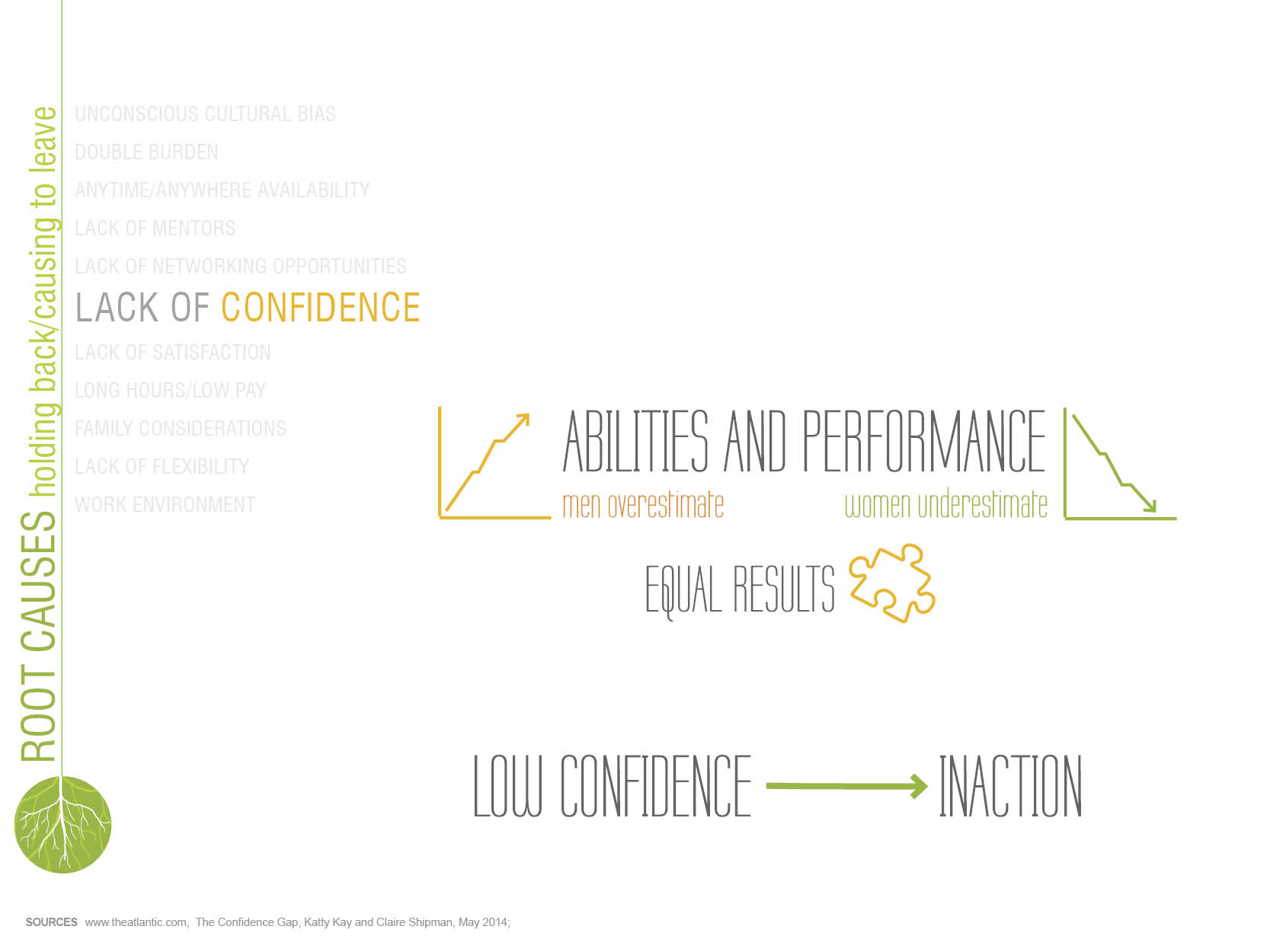
  • Face the Confidence Conundrum. Speak up. Know your worth and value. Bias is out there, especially for lack of understanding of the #Archimom's dilemma. Don't forgo asking for a raise, even if you think that you are fortunate to have a flexible schedule coming back from leave.
  • Expect the unexpected. While you try to establish some resemblance of order, structure and peace in your life, be prepared for things to go south. Don't beat yourself up for coming up short, tomorrow is another day.
  • Set aside time for you and your spouse to do special things once a month or more often if you can. It is these times of doing somethings out of the ordinary that you will feel most inspired and rejuvenated. ( aka. "Treat Yourself" or "The Finer Things Club). 
  • Build a support network. They can be clients, consultants, project team members and other Archimoms. Have them be your mentors and champions. Share your challenges and your triumphs.

Everyday Moments of Truth: 

  • We have a morning and evening routine that changes everyday. Having a working family Google calendar is essential for remembering all the appointments, bill payments, child care and life's important events. 
  • I try to read with my kids every night since a very early age. It is quality bonding time and you are also saving on future SAT Prep courses.
  • I love to cook. So much so that I spend a lot of time making food for my family. I cook a lot on the weekends and then fridge or freeze for the coming week. Friday nights are my night off, so we splurge and dine out. We eat breakfast and dinner together as much as possible. Family conversation is what I look forward to during our meals.
  • It is difficult, but work and life flexibility brings the challenge of setting boundaries. Work while at work and focus on family while at home. You will feel less guilty. 
  • I really try to leave the office when I have committed to leave. I try to check in with my project team members at least an 1 hour before departing so I don't get caught talking and leaving abruptly or worse, getting home late to relieve the nanny. I ask for special meetings to be scheduled with 3 days notice prior so that I can make alternate caregiving arrangements.
  • Prioritize face time that you spend at work to have collaborative meetings and interaction. Solitary/quiet work usually takes place at home, if need be, after the kids go to bed. I leverage email on my iphone so that I can be responsive when necessary during the week.
  • With The Missing 32% Project, life has become really full. Some have asked, "How do you do it all?" My secret? I don't do it all at the same time. It's like the story about the jar with rocks, pebbles and sand. Figure out what your rocks are and put them in the jar first. I have learned more recently from reading Leading the Life You Want, by Stew Friedman. What gives you energy? Focus on those things and try to tie them together. It has been life changing and worth your time to read.

Rosa T. Sheng, AIA, LEED AP BD+C, @rosasheng

Senior Associate at Bohlin Cywinski Jackson


Would you like to see more Archimom Stories? See who else has dropped in to share

An Archimom's Everyday Moments of Truth: Laura Melville Thomas, AIA

I am a newbie to social media. I was born in the Baby Boomer years, and learned to draft and letter and do construction documents by hand.  Here’s the catch, the only reason that I am involved in any way with “social media” is my eldest son---an advertising, communication digital media guru.  So, yes, I am an #ArchiMom and proud of it.

I have been following the discussions about the missing 32% of women working in the architectural profession on social media, and saddened because in the –gulp--almost 35 years since I graduated with my professional degree it has not improved much, if at all. Following my sons’ instructions about keeping up with social media (interesting how things flip) I have been following the “Day in the life of an Architect Series” on Twitter.  It was great, but wait ---hold on, what? Where are the REST OF THE WOMEN?  Twelve posts, and only two from women architects. How can that be?

I look at this a bit differently, a bit in the rear view mirror, as I am somewhat more “seasoned” (read older) than many who posted.  Perhaps this is a good thing, I am looking at motherhood and the working architectural professional with many years experience.

I became an Architect because I loved to draw and make things. I didn’t yet understand what design was. I still draw and paint and design. My mother was a working professional, and a British Navy veteran of WWII. She set my compass.  It never entered my mind that I would not continue to work professionally with a family. 

I was blessed to have a woman professor as part of my thesis committee, to move to Boston after graduation and get the job that I really wanted, during (OK, yet another) recession, and to be hired by and work with a woman partner in a great firm. Thank you Donna and Dell. I had mentors. They taught me to be tough enough, yet genuinely human in my thinking and in the workplace. We are still friends.

I have been married to another Architect for 32 years now. He is my biggest supporter and will not let me quit---no matter how tired I am or frustrated or disappointed I might be.  He helped me with our children daily, making their lives part of his.  Except laundry. He hates laundry, but that’s OK, I am a terrible cook.  We have raised our young children together into our grown sons.  I relate to every comment about juggling client needs and family needs,  personal time, and even baby spit on black clothes.

Now I am “the Boss”.  I have grown from just me as a sole proprietor to owning a multidisciplinary firm of 11.  We have 4 men and 7 women.  Go figure!?  I appreciate all of them.  I am now the mentor and the boss and it is my turn to not only set standards and expectations, but to pay it forward.

My ‘Secret Sauce’ Recipe Ingredients:

  • A strong woman architect mentor.  (Thanks Dell)
  • A supportive family and/or spouse.
  • Great child care (Thanks Dee)
  • A flexible schedule and attitude.
  • Passion for what you do.
  • And the last, my super secret, all-powerful ingredient: Living, working and having my kids go to school in one zip code.

My everyday moments of truth:

  • My professional life is rewarding.  The rewards come from the design work, the finished projects, the sketching, the watercolors, the interactions with my clients and colleagues.
  • It is also challenging and frustrating and exhausting and sometimes NO FUN. Especially when I find myself spending as much time-or more running the business end. Proposals, financials, insurance, hiring, firing (ugh!) and MBE/WBE certifications.
  • I find time to do something for myself every day.  Swim, run, paint, play music. There IS time. For me it is an early swim or run, before work.  Luckily my husband and I switched off early/late schedules when the boys were young.  I think that we only forgot to pick up our sons at swim practice once…
  • Understand how to “Declare it done”---not finished, just done. It will save your sanity.
  • Always “Follow Up Beyond Belief.”  It will save your reputation.
  • Do not work a lot of overtime. Ever. Get your work done and go home.
  • It is not going to be perfect.  In either the child raising or working categories.  Give yourself a break.  And this coming from a type A++person is really hard to do. I still sometimes beat myself up. Just throw in a child’s major illness or special needs into the mix and then you will truly find out what you are made of.
  • Don’t throw anyone under the bus. If you accidentally do, apologize.
  • Thank, thank, and thank again those that help you. It does take a village.
  • My two grown sons have become wonderful men in their own right with their own careers. They have seen their mom’s work and they have always been proud of me, even when I think I have let them down with unnecessary impatience or expectations.  I, of course, see thousands of things that I could have done better.  But that’s OK, my family and my firm are still here and getting stronger.
  • Show young professional women that they can do it.  Don’t give up.  #ArchiMom

Laura Melville Thomas, AIA, LEED AP @LauraMTARX 

President, Melville Thomas Architects, Inc., Baltimore, MD


Would you like to see more Archimom Stories? See who else has dropped in to share

An Archimom's Everyday Moments of Truth: Emily Grandstaff-Rice, FAIA

In my social media feed, it was difficult to overlook the #ArchiTalks series last week prompted by Life of An Architect blogger and architect Bob Borson AIA. With the topic "A Day in the Life of …” the like-minded bloggers/architects did a wonderful job composing a diverse range of responses. While individual contributions, each response was strategically posted on the same day through social media. It was like an early holiday gift of personal narratives about my favorite kind of people—architects.

While reading the many posts, I have learned we all wake up early, we all struggle with things we don't want to do, we all think about the now and the future, and we all eventually go to asleep to wake up and do it again... and again. There were moments in which I saw how my life was similar, but also uniquely different. I was not the only one to notice this. As Laura Thomas AIA and AIASF The Missing 32% pointed out on Twitter, what was missing from the collective group was the voice of an #ArchiMom.

I was encouraged by how many parents (fathers) were featured. My kids are fortunate to have not one, but two architect parents, so I love that parenting was a key part of many of the daily chronicles especially for fathers. But still, where were the mothers?

It's OK. We're used to being flying on their periphery of keeping up with water cooler conversation. I have been known to roll my eyes at the office sports talk in the morning. Either I'm too old or I have to pick up my kids to go out with my co-workers for regular Friday drinks. And yes, I do keep an extra set of clothes at work.

I am an architect. I am a mother. And this is my list of everyday moments of truth to contribute to the conversation because honestly, there is no typical day for me:

  • I work on things that don't get done. Not because I lack the ability to get them done, but because there is no 'done', only an agreement with myself that the work has moved closer to 'good enough'.
  • I think wild thoughts. This is because I am and will always be a dreamer. (This is either a symptom or a side effect of falling in love with architecture.)
  • I get obsessed by details. I get obsessed by process. I get obsessed by typeface. I get obsessed by making an excel spreadsheet. I get obsessed at the screw that is not placed in the right location. If OCD is marked by anxiety and unease of triggers, what do I call when I get really worked by my visual environment? I love to see. I love to think. I love to design. It is very difficult to turn this off and not notice my environment.
  • I get stopped by 10,000 little questions about 10,000 little things every single day. Sometimes my patience runs short. OK, often my patience runs short. Maybe if I wasn't interrupted so much I could get things done... maybe not. Quiet is a luxury.
  • Getting lost in the work is part of the work. Design is not a linear process.
  • Nothing can be found unless it is first declared lost. (My kids are so sick of me saying this.)
  • More than my love for architecture, I love people. Without people there are no buildings.
  • Architecture is a form of education. Architecture is a form of communication. We are as much teachers and storytellers as space creators and problem solvers. We co-create the environment of a space and its meaning. Architecture will always be more than just a building.
  • I work to fulfill both my potential as an architect and to create a better world for my children. Seeing the world through their eyes has been a life changing experience for me. I am a better architect because of them. I am a better person for them.

Emily Grandstaff-Rice, FAIA, LEED AP, @egrfaia


Would you like to see more Archimom Stories? See who else has dropped in to share

An Archimom's Everyday Moments of Truth: Blog series

Try to be present in each moment. Each moment is its own gift. You can remember them, but you cannot get them back once they are gone. Hope for the joy of new moments, with their own gifts.
— Joseph Bakter
buildingblocks.jpg

Last Monday, a group of well respected, fellow architect-bloggers who periodically post to #Architalks (the Architect's "social media water cooler") on different topics featured "A typical day in the life of an Architect". Started by Bob Borson (Life of an Architect) #Architalks is a brilliant idea that produced a veritable collection of candid and meaningful stories of "What do Architects do all day?" benefitting the public at large and fellow architects. Many of them shared their perspectives as sole practitioners and noticeably only two were women. By no means exclusive, inadvertently this tweet and the #Architalks blog series lead to some quick self-reflection: Is there a typical day as an Architect through my lens of wife and mother? The short answer was "No. The typical day does not exist in "a day in the life" for me, (and many of my fellow Architect parents and even more so for Architect mothers). 

Enter #Archimom; a unique breed of architect, wife, mother, innovator and chronic overachiever. Archimoms make up part of the 18% of women in architecture who have survived the attrition based on pinch point factors brought out in the Equity by Architecture Survey. The term came from my fellow Syracuse University alumnae, Jung Lee Masters when she was spreading the word about the TM32PP and Equity in Architecture Survey, #Archimom embodies the amazingly talented Architect with the resilient powers of a modern day Marvel Superhero.

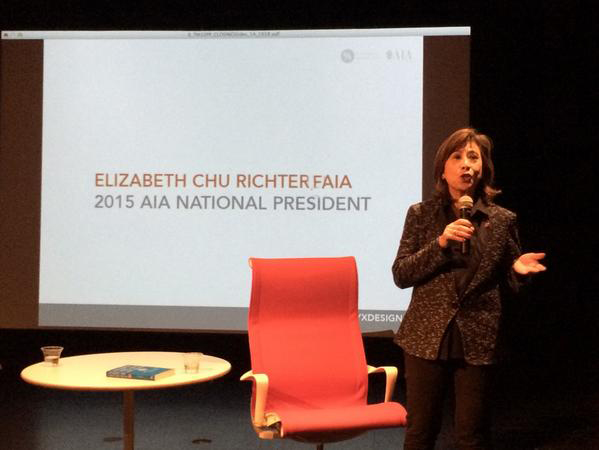
Archimom is an alter ego, a new state of mind. You don't need to literally be an "architect and mother" to identify with the mindset. Despite the challenges of time allocation, implicit bias, and constant guilt, we can learn many valuable lessons of finding satisfaction, meaningful work, prioritizing, and work/life flexibility from these Archimoms. Their "real life" truths are the beginning of storytelling as a means to inspire and motivate underrepresented talent to stay in the profession. And as witnessed most recently, an Archimom like Elizabeth Chu Richter, FAIA, who took time off from the profession to raise 3 children can come back to architecture to lead a practice as CEO and become the 2015 President of AIA National. It is nothing short of awe inspiring.

As luck would have it, a conversation developed on Twitter about the great stories on #Architalks and it quickly became apparent that the #Archimom perspective needed and wanted to be shared as well.  So a few of the Archimoms on Twitter decided to join together for a feature week on some everyday moments of truth and secret sauce ingredients for success. We reached out on Twitter for posts by Friday and promised a launch on Sunday.  Emily Grandstaff-Rice was the first to respond and Laura Melville Thomas quickly followed with her personal #Archimom experience.  So what started as a casual conversation on Twitter about using our voices, quickly grew into an amazing series of 13 stories within the course of the week. 

While we are featuring Archimom stories, we welcome more people to share their own adventures for Architecting and Parenting. (Mr. Archimoms welcome too!) What are your Top 10 everyday moments of truth and secret sauce recipe?

LInks to An Archimom's Everyday Moments of Truth Blogposts: (more fun than binge watching Netflix and possibly life changing in the process.)

Overview by Rosa T. Sheng, AIA 

NOTE: This page was last edited on Sunday, December 14, 2014 


Don’t ask for permission, ask for forgiveness.

Guest Blogpost by Jessica Rafferty

I recently traveled to Napa with two friends who are designers. Each sip of wine was followed by a critique of the tasting room, the detailing of the windows, or the questionable lighting used below the bar. Our conversation focused on the superfluous details while other visitors discussed the taste and quality of the wine. This is may seem like a familiar scene when designers get together. Work never really stays in the office when you’re passionate about it.  

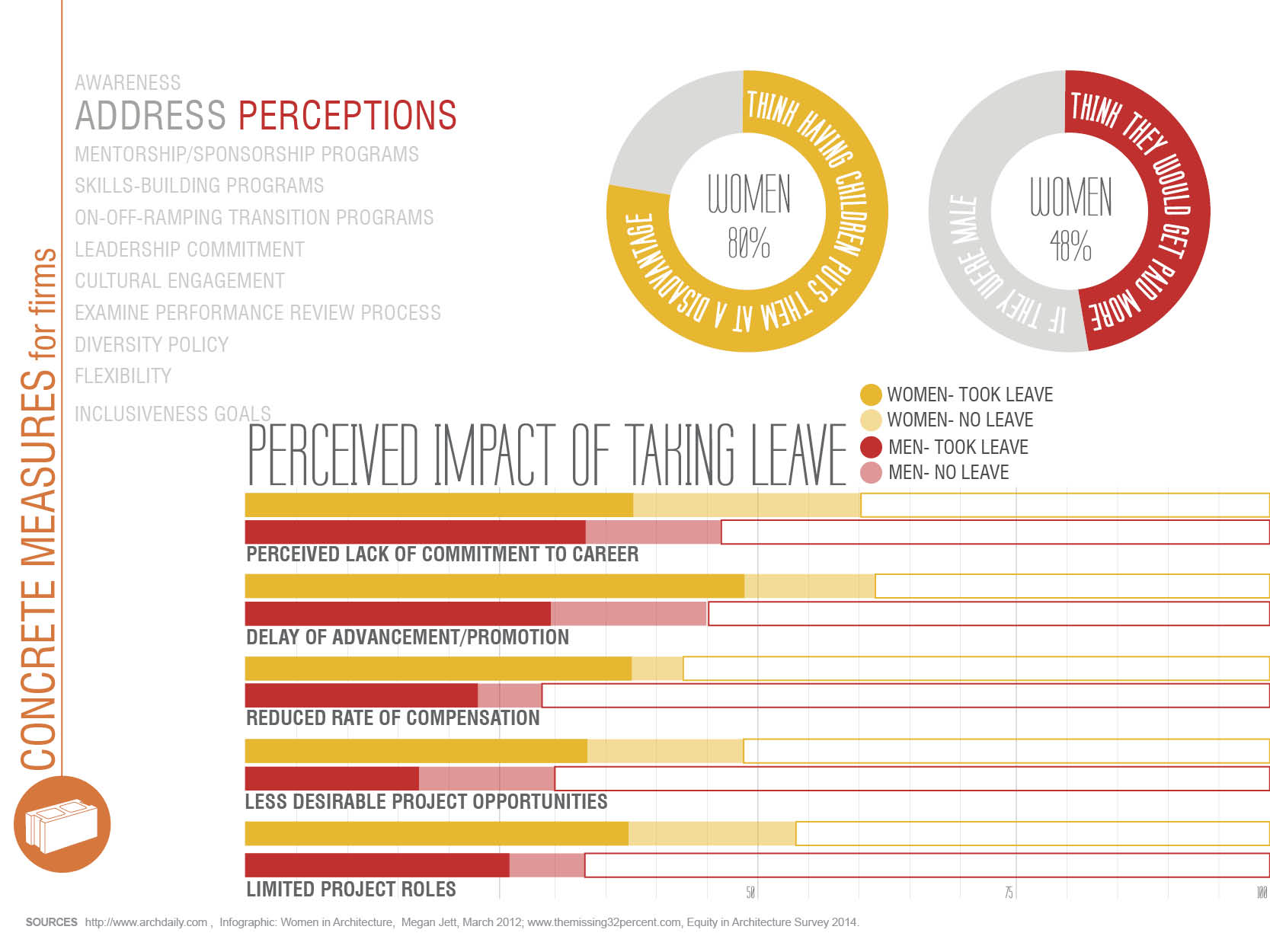
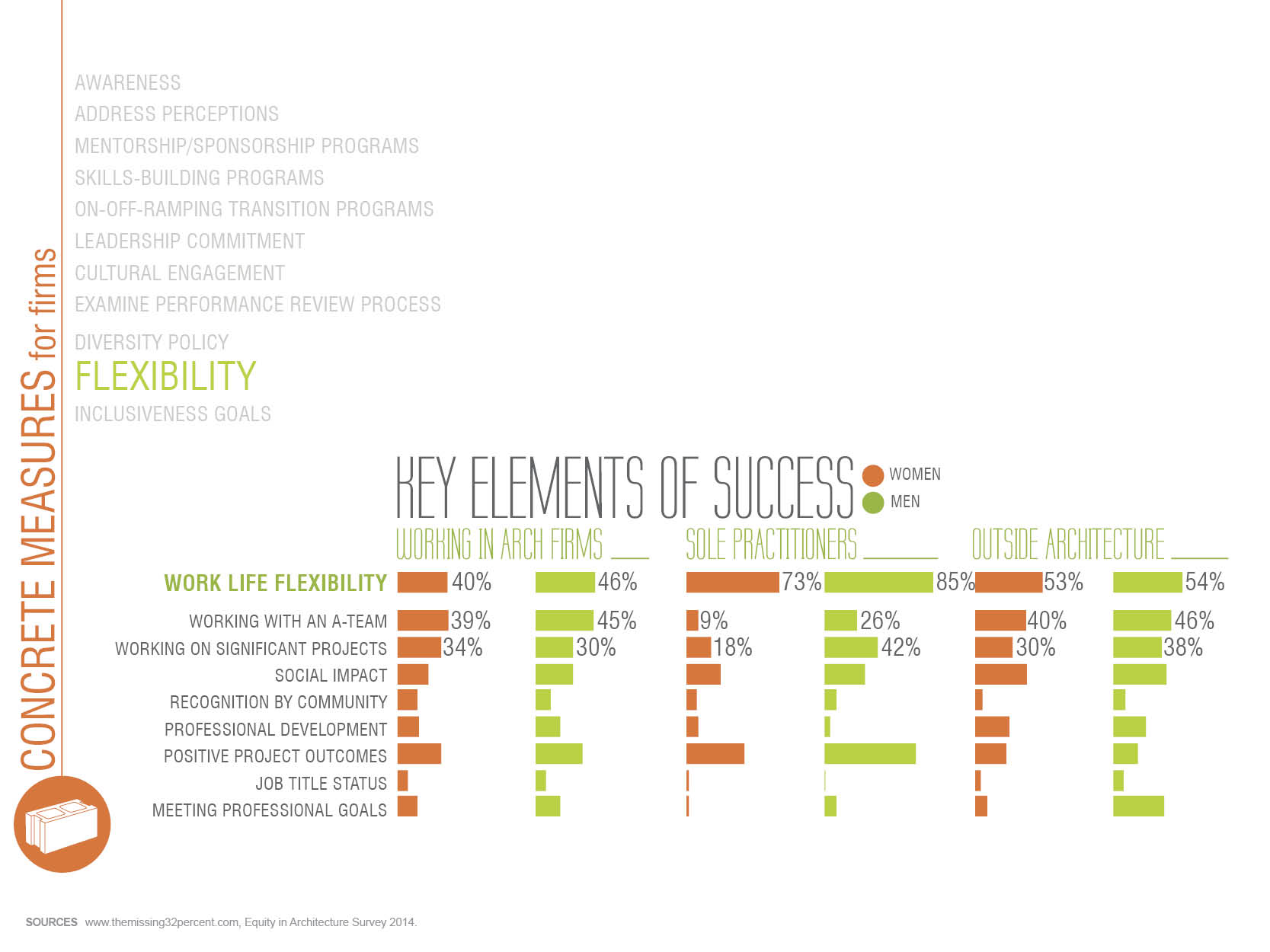
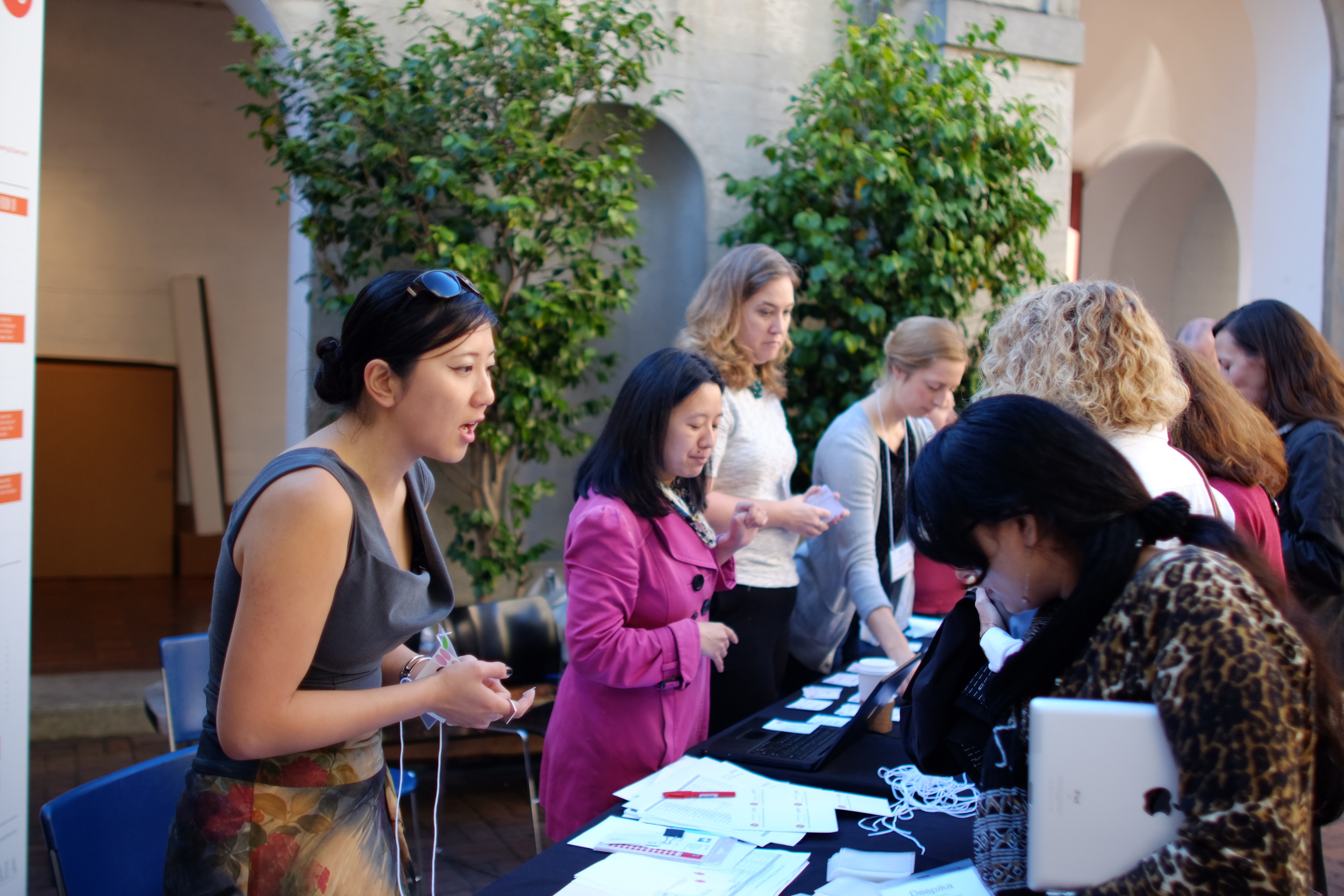
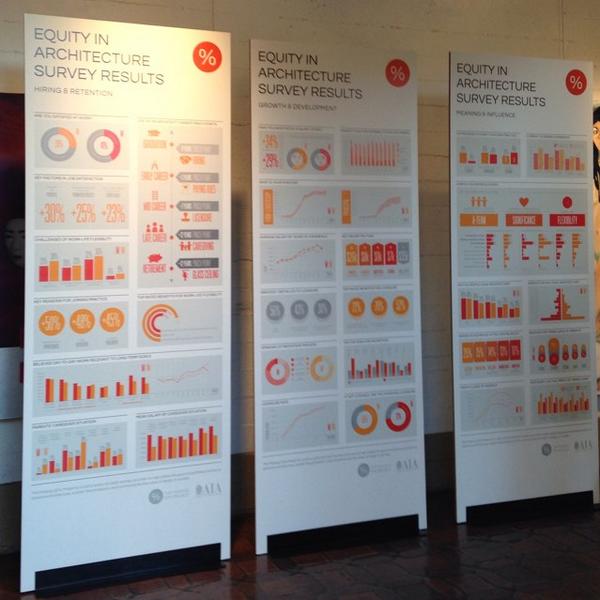
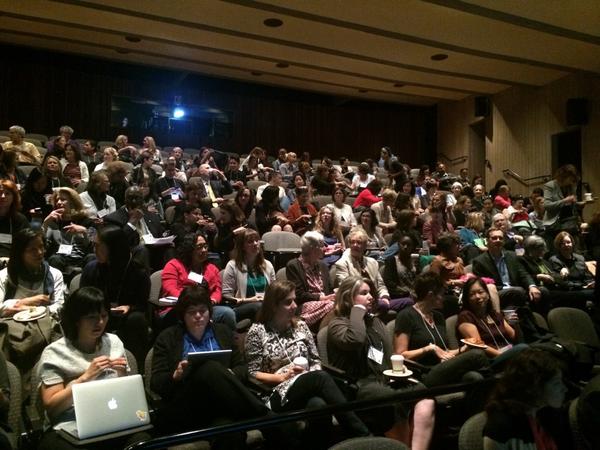
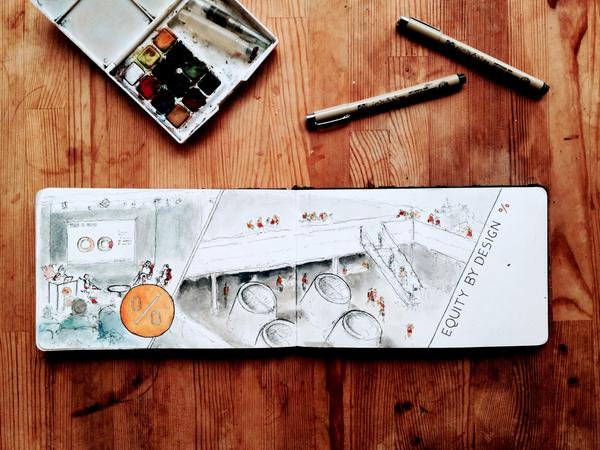
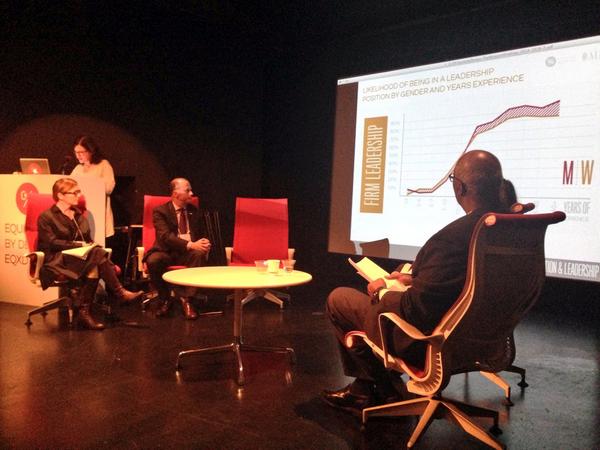
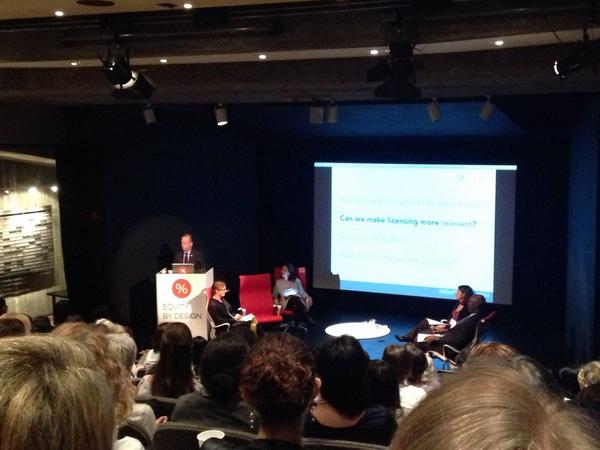
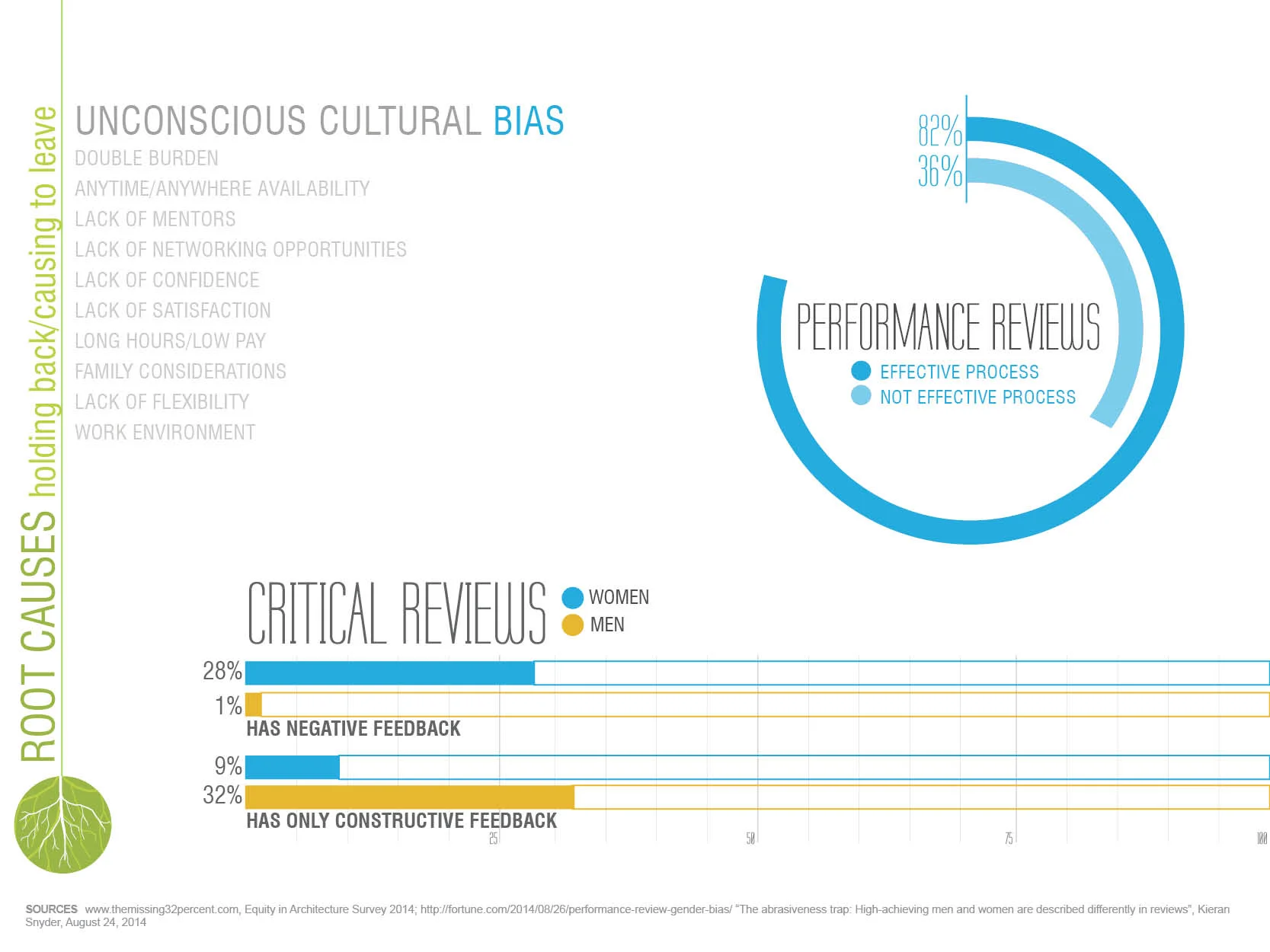
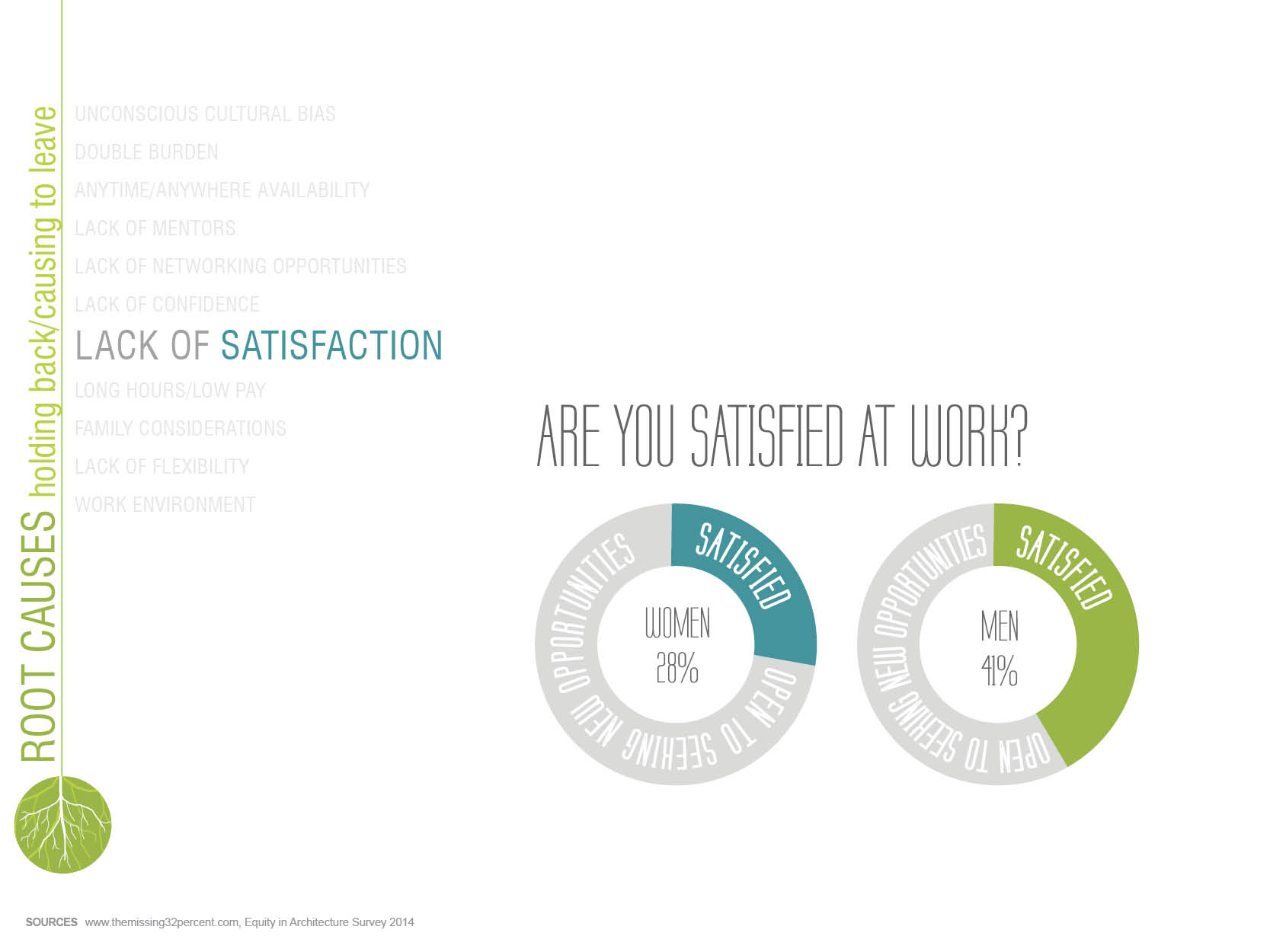
At October's Equity by Design symposium in San Francisco, passion, well above financial compensation, was a common description as to why individuals took the path to architecture. However, according to this year’s Equity in Architecture Survey, a staggering amount of architects and designers are not satisfied by their jobs. After all-nighters in school, costly testing, and years of training with the expectation of making significantly less than other high-qualified professionals, what do you do when the passion starts to slip?

During the recession, I often heard my coworkers express that they felt lucky to just have a job. However, as growth returns to the industry, the Equity in Architecture Survey showed that women, as well as men, were struggling to find or maintain interest in their projects or job duties. In just the past year, my LinkedIn feed has been a critical tool for me to keep up with my peers’ movement in the industry, but do you have to leave your current job to find satisfaction? 

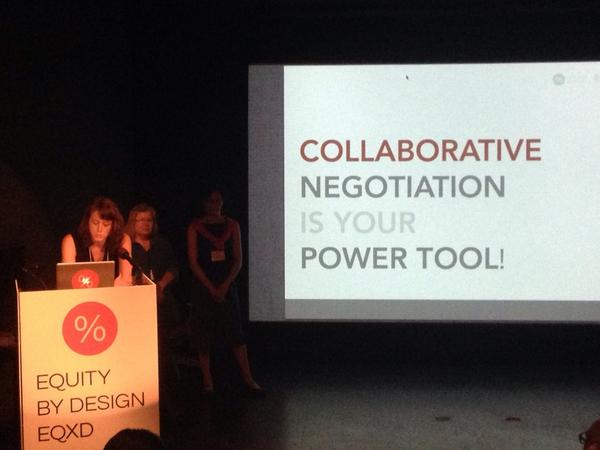
A major lesson from Equity by Design was to communicate your value. Communicating is not easy for everyone and that’s coming from someone who does marketing for a living. Laurie Dreyer of Stantec recommended in the Collaborative Negotiation session, “Don’t let karma dictate your future.” Speak up, ask for more. The worst someone can say is no, but at least you tried. This reminded me of one of my first project manager’s motto, “Don’t ask permission, ask for forgiveness”. The saying I’m sure was meant to inspire risk taking in design (but was often used to avoid explaining mysterious credit card charges). I like to consider the saying with a grain of salt, and often think about the phrase when I hesitate to speak up or think twice when negotiating.

Architectress in Construction: Equity Then and Now

Earlier this month, the architecture community lost a significant person, Judith Edelman. She was significant not only because of the quality of her work, but also in her bold efforts fighting for equity in the AIA (American Institute of Architects) and in the profession of architecture. In 1974, Judith Edelman faced the American Institute of Architects with data showing that only 1.2% of registered architects were women. She wanted to show data that proved women were not “paranoid chicks” for thinking there was a serious issue within the AIA.  She raised awareness about the gender disparity within the AIA and also founded the Alliance of Women in Architecture.

As a student at Connecticut College and New York University, she advocated for the introduction of more modernist architecture in the academic curriculum while, ironically, her professors often stated that they were wasting their time on teaching the girls that were in the architecture program. After finishing her education, her struggle to find a job only proved that inequity was her continued reality. She was hired by Huson Jackson to draw and design brickwork for mental health hospitals. “He was a great thinker, but he couldn’t draw, interestingly enough,” she stated in an interview. After some travels abroad, she and her husband started their own firm and designed housing for the needy, health clinics, and other various buildings in New York. Ms. Edelman's work was admired and received many awards.
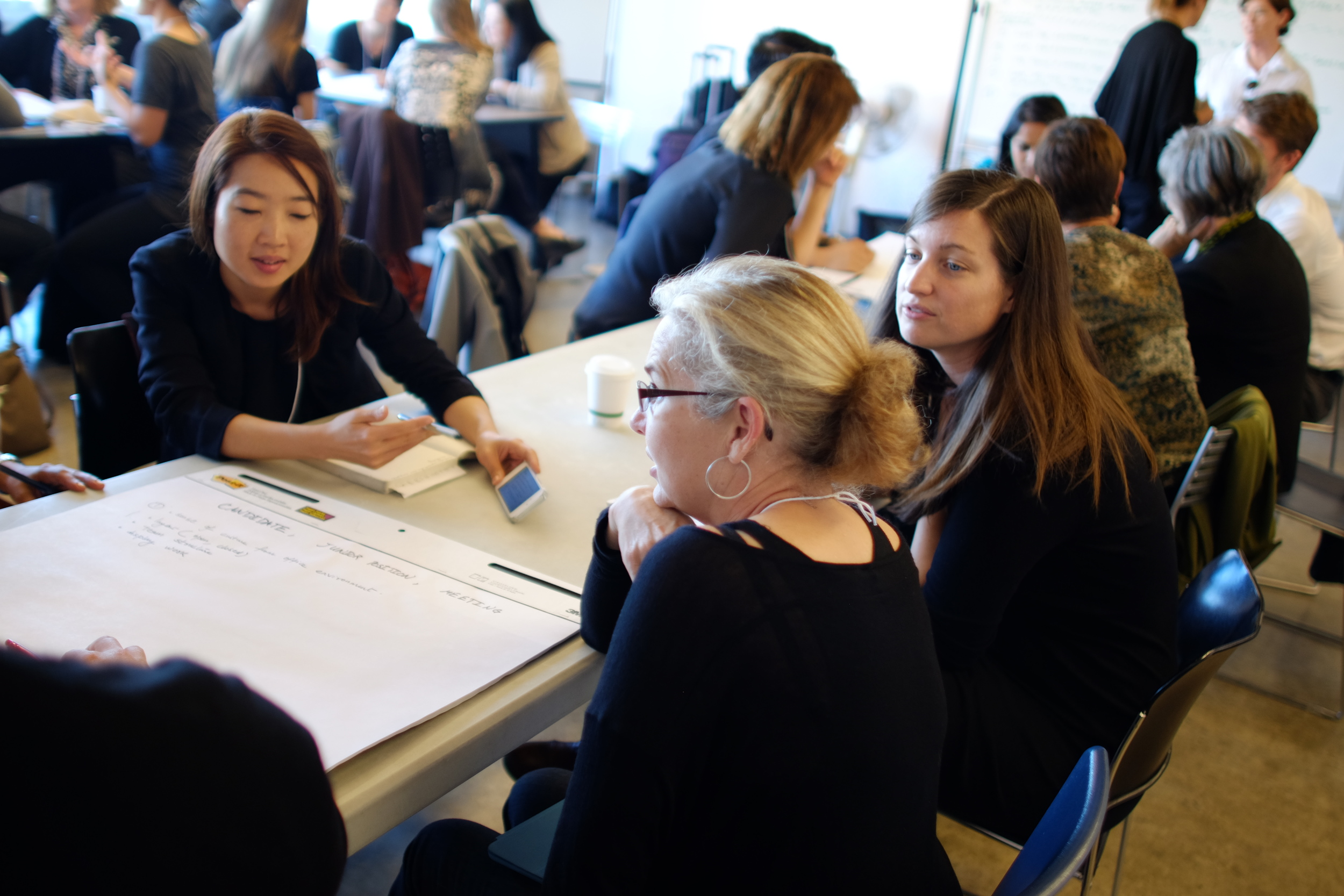
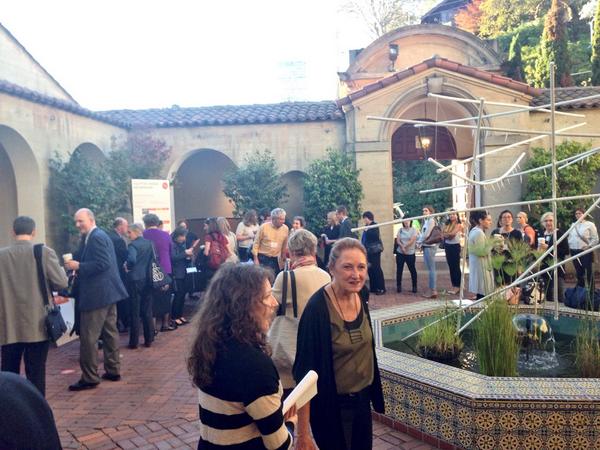
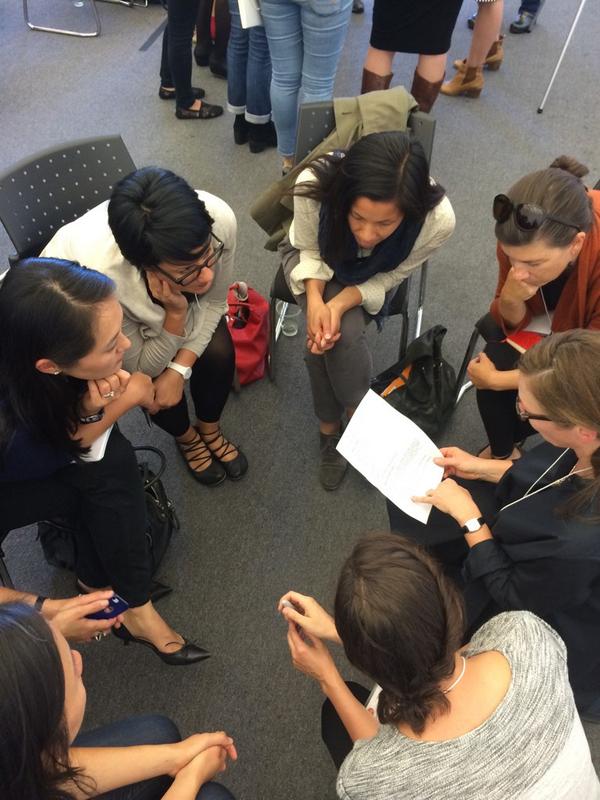
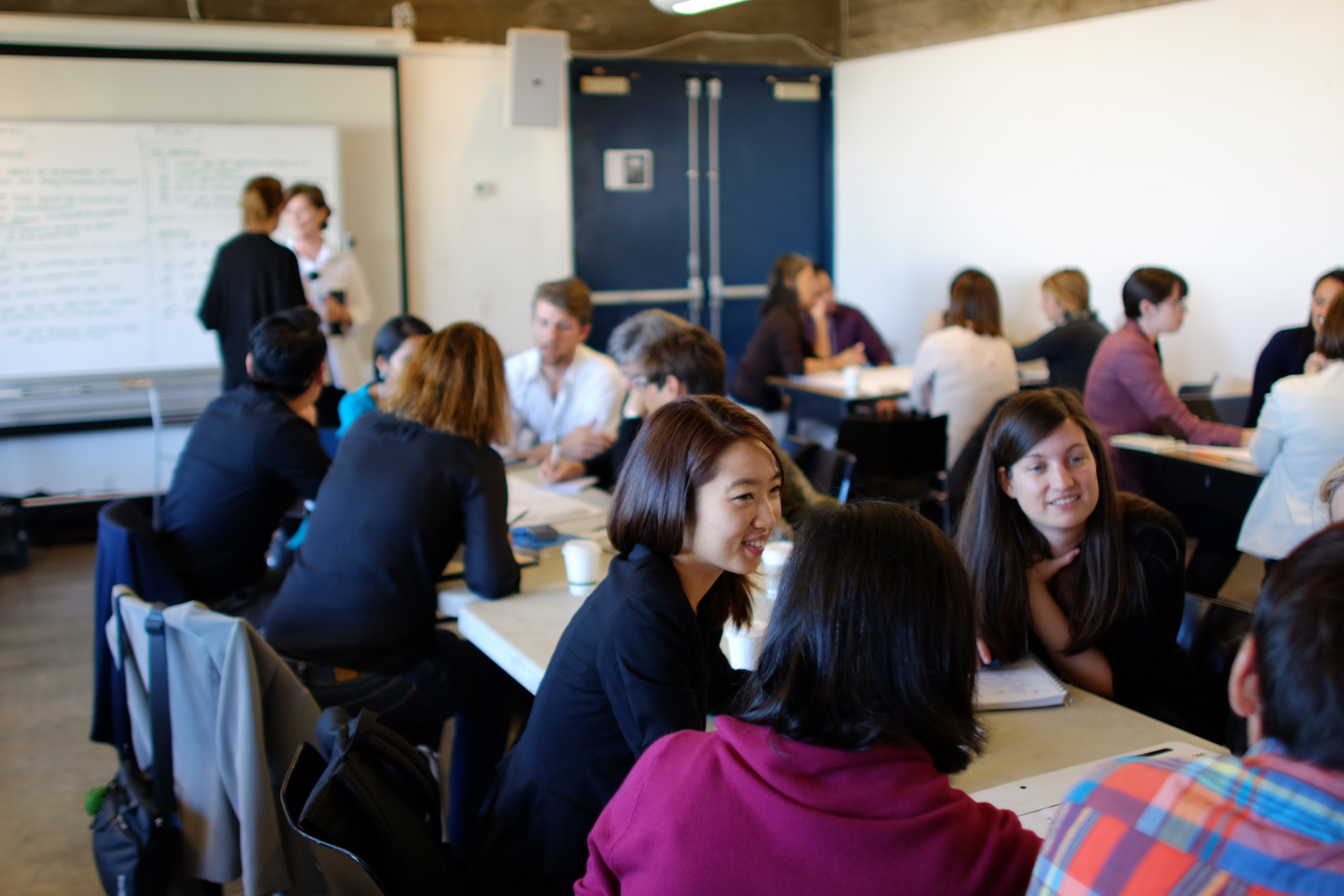
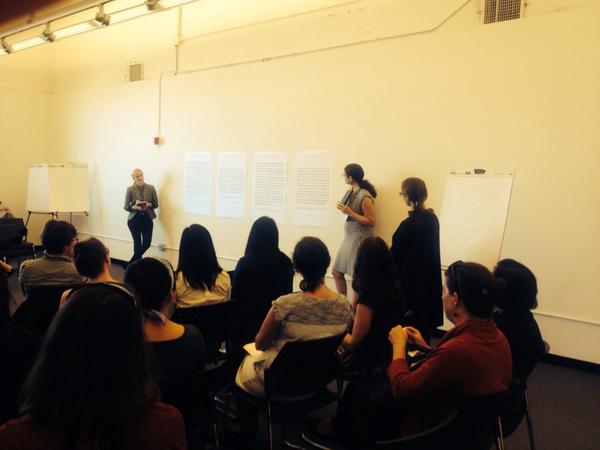
Growth & Development Session. Photo credit: Daniel Wang

Growth & Development Session. Photo credit: Daniel Wang

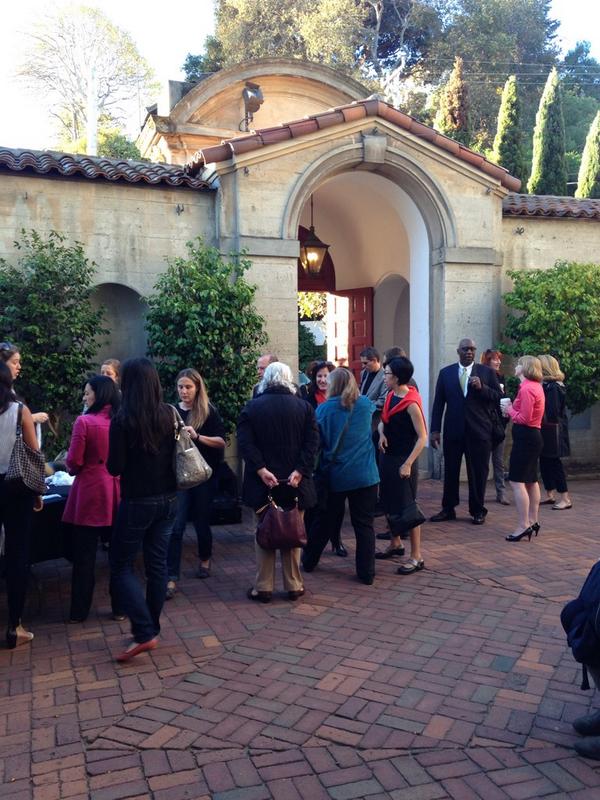
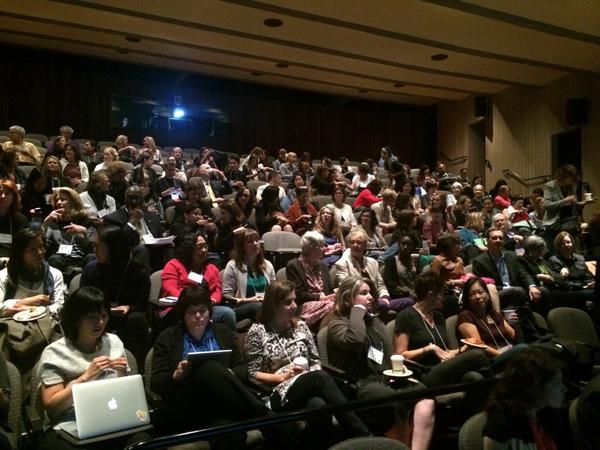
Judith was an early ambassador for Equity in Design by shedding light on the issue of inequity within the profession. Her life story helped me realize that to change something, you must be a part of it. Attending the Missing 32% Symposium was when I felt I truly understood this concept. Even though we all acknowledged that there was still a long way to go, the fact that I saw, heard and met women (and men) of all levels, really committed to the movement, was not only crucial for me, but solidified the fact that this is extremely important. It was evident that everyone had really given the topics serious thought and had begun to think of creative solutions. It brought peace of mind to know that I wasn’t alone in my issues with the profession, but that there were really influential people all around me to prove what was on my mind was really important. Settling was no longer an option.

Here we are - the active participants of The Missing 32% Project! There are many parallel issues that continue to exist and I believe that it is important that we pull the techniques from the generations of women that began this journey before us, and translate them to what is concurrent today. Judith’s battle is our battle. The new generation of female architects should be proud to be women, as they are proud to be designers.

It takes a lot of courage to begin a movement. I appreciated the research conducted and the data that reveals that there are continuous issues throughout the length of the individual’s career; which means the participation from everyone at all levels is critical. It is also vital that efforts continue throughout the various pinch-points, and not just when we are experiencing them.  It helps narrow the focus, while still being able to acknowledge the parts that make up the bigger issue. On a personal note, attending the Symposium was a very important first step. If you cannot identify what the challenge is, you will not be able to create a solution. I am committed to focus on: gaining more confidence, identifying what I want to do, communication, identifying a champion (especially as I am at the beginning of my career), and practicing presenting my ideas.

I am now aware of how big inequity has been and still is. Without the initial wave from Judith, and the follow-through of The Missing 32% Project, I would very much debate staying in the profession of architecture (which I have wanted to do for 12 years) because quality of life is more important than a job title. However, it is very possible to have both. It’s a creative profession, and that should encourage us to be creative in how we fit in the big world of architecture.

Post by: Danelle Gillingham

If not me, Who? If not now, When? Equity is Everyone's Issue.

In my nervousness for this speech and my moments of doubt, I’ve told myself firmly, ‘If not me, who? If not now, when?’ If you have similar doubts when opportunities are presented to you, I hope that those words will be helpful because the reality is, if we do nothing, it will take 75 years or for me, to be nearly 100, before women can expect to be paid the same as men for the same work
— Emma Watson - He for She
 

A few weeks ago, UN Women Goodwill Ambassador and actor Emma Watson gave the Pantheon of all speeches for equality and inclusion for a special event launching the HeForShe campaign at the UN Headquarters in New York. If you have not seen the video or read the transcript, I highly recommend that you do. The most poignant 8 words of her monologue that resonated the most : If not me, who? If not now, when?
As we approach Equity by Design on October 18th next week, I vividly remember being confronted with the same question over a year ago after the 2nd Missing 32% Symposium; What would I do to change inequity in professional practice? From talking to other women in architecture, there was much in the way of anecdotal evidence of similar challenges in their careers. However, statistics and surveys around this topic were lacking in substantive data; Data that could be the calling card to initiate a difficult but necessary conversation about Equity in professional practice. The very existence of The Missing 32% Project was dependent on the my decision to "act" and subsequently the people who have joined and supported our work. In this last year, it has caused a chain reaction of "actions" which resulted in a collective Movement for Equity beyond our wildest imagination.  

The issues surrounding Equity in Architecture are not necessarily black and white, openly discriminatory, or right vs. wrong. They are more complex and nuanced in implicit biases and stigmas; a working culture embedded with gender and cultural ideologies going beyond architecture and a profession wrought with challenges trying to keep up with a rapidly advancing world. While systemic changes may seem daunting and impossible in our career lifetime, I believe that individuals choosing to engage in the conversation and taking action (grass roots) is just as vital and necessary as institutional/corporate change. 

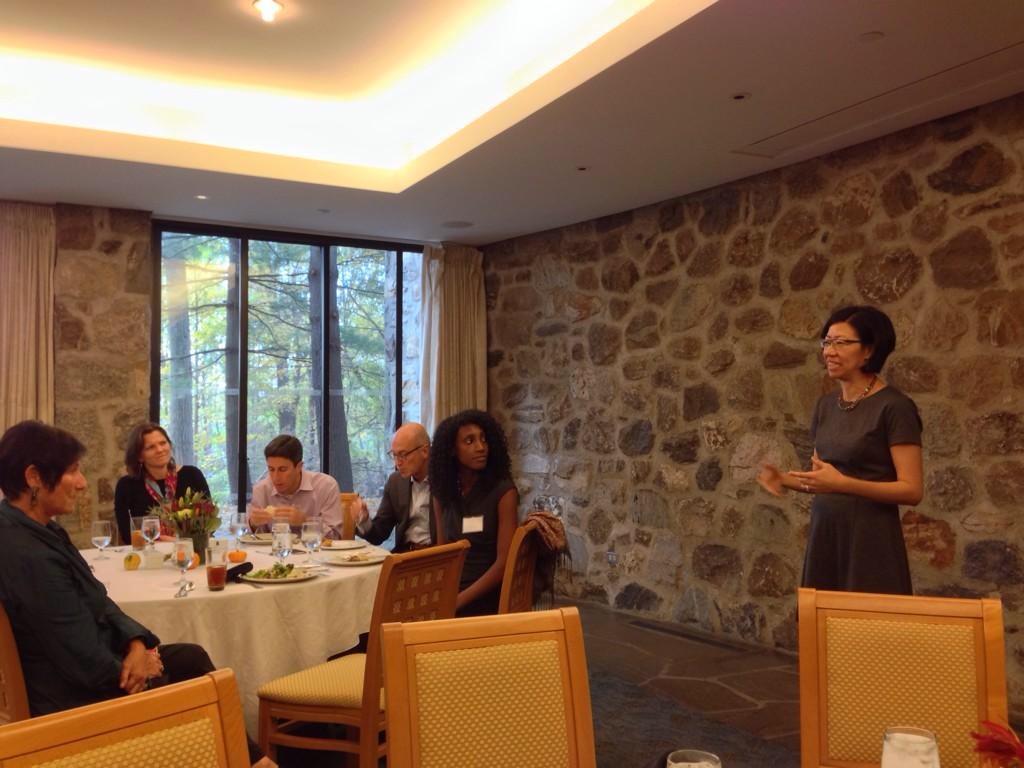
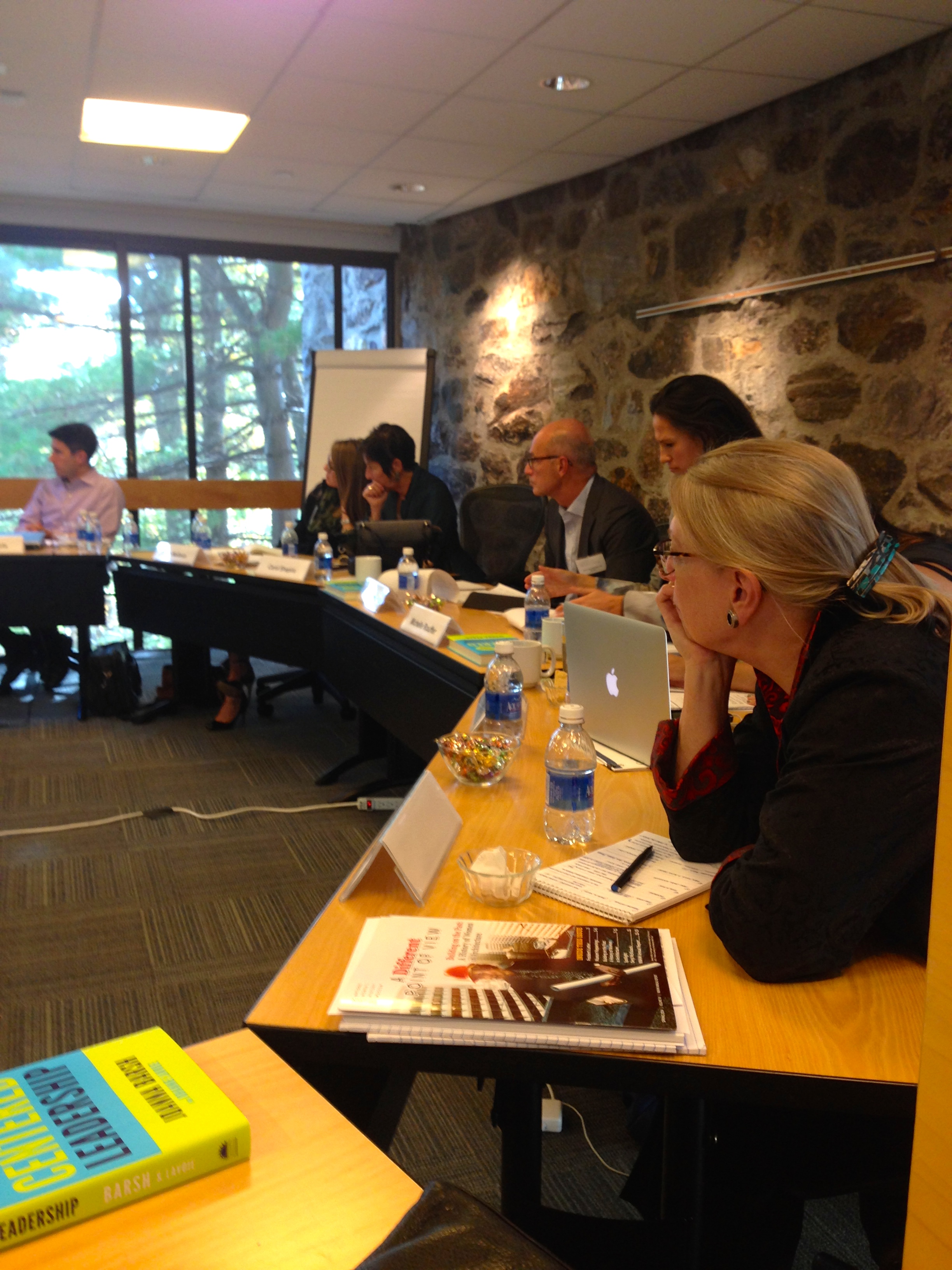
Presenting The Missing 32% Project origins and goals at the Industry Leader's Roundtable

Presenting The Missing 32% Project origins and goals at the Industry Leader's Roundtable

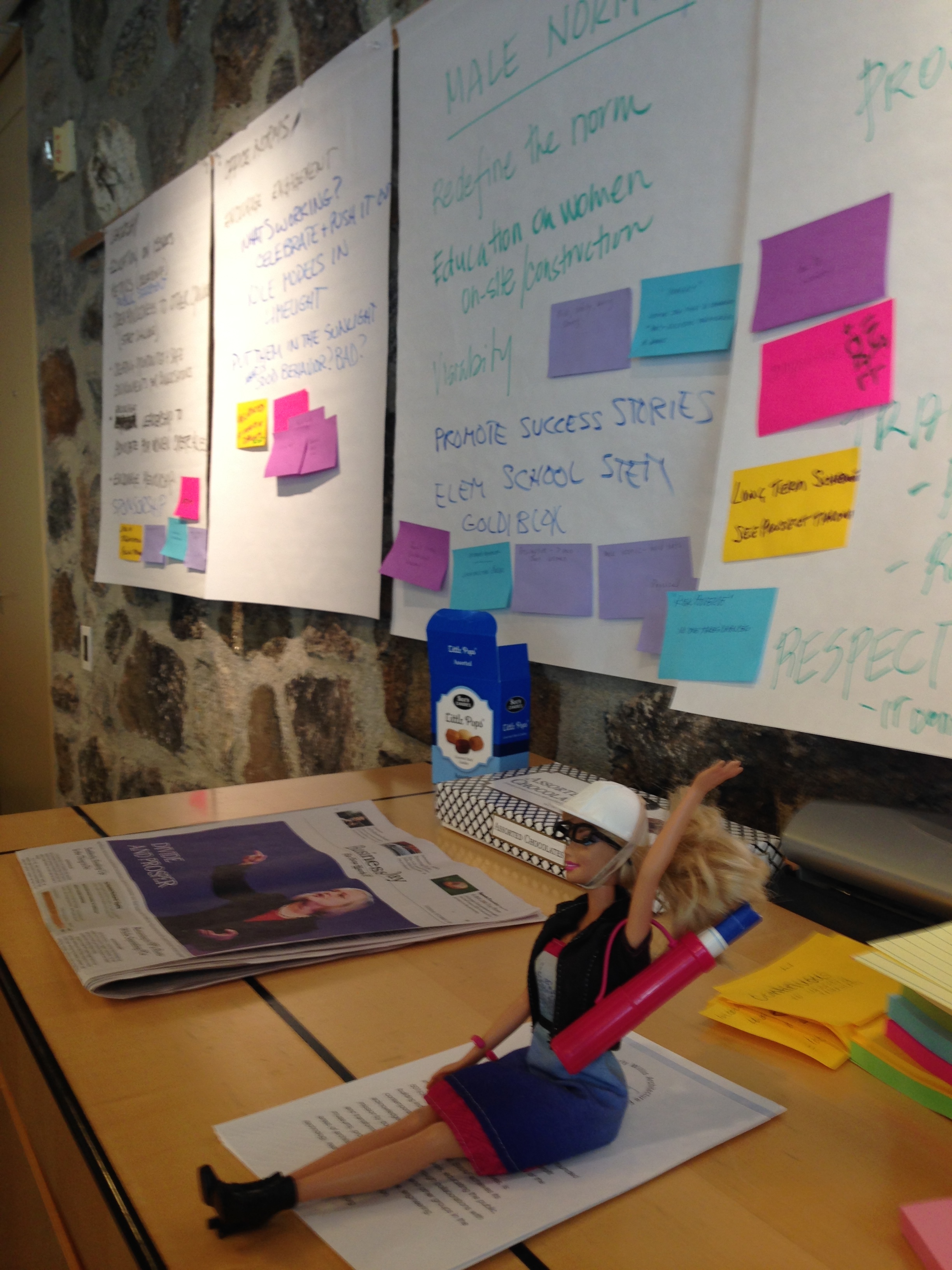
This past week, I presented at the 5th Annual Industry Leader's Roundtable hosted by the Beverly Willis Architectural Foundation at the IBM Learning Center in Armonk, NY.  This year's program discussed Centered Leadership as a foundation for Diversity, Inclusion, and Equity.  Fiona Cousins, Principal of ARUP and BWAF Trustee presented "Diversity and Inclusion Knowledge Cards" an initiative started by Erin McConahey, Principal of Arup in partnership with the Society of Women Engineers. The knowledge cards feature provocative questions, summaries of current research, and intriguing data points to start conversations in the workplace and beyond. Arup and SWE have made these cards available for purchase or knowledge card activities readily available on their website. The biggest takeaway from our discussions was a salient point made by our McKinsey facilitator; In order to make change happen, the accountability of putting a plan into "action" needed to occur within 48 hours of the initial commitment.  

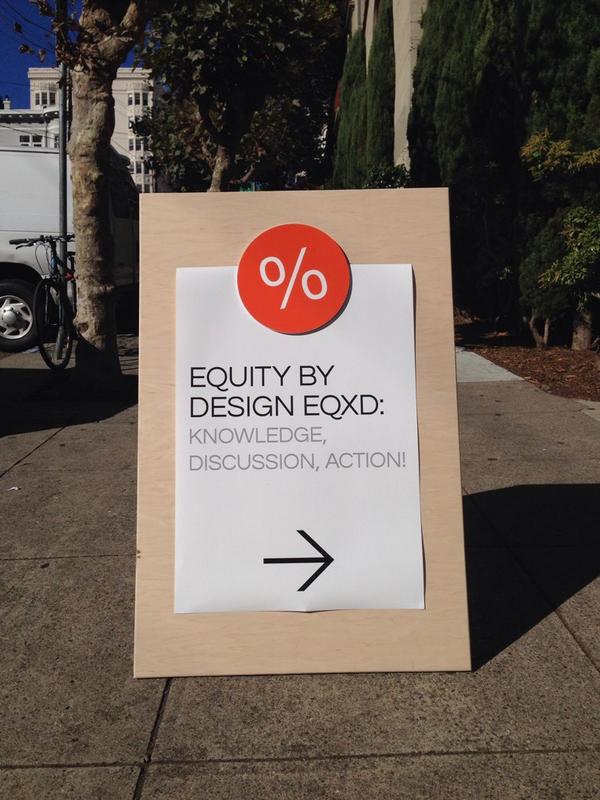
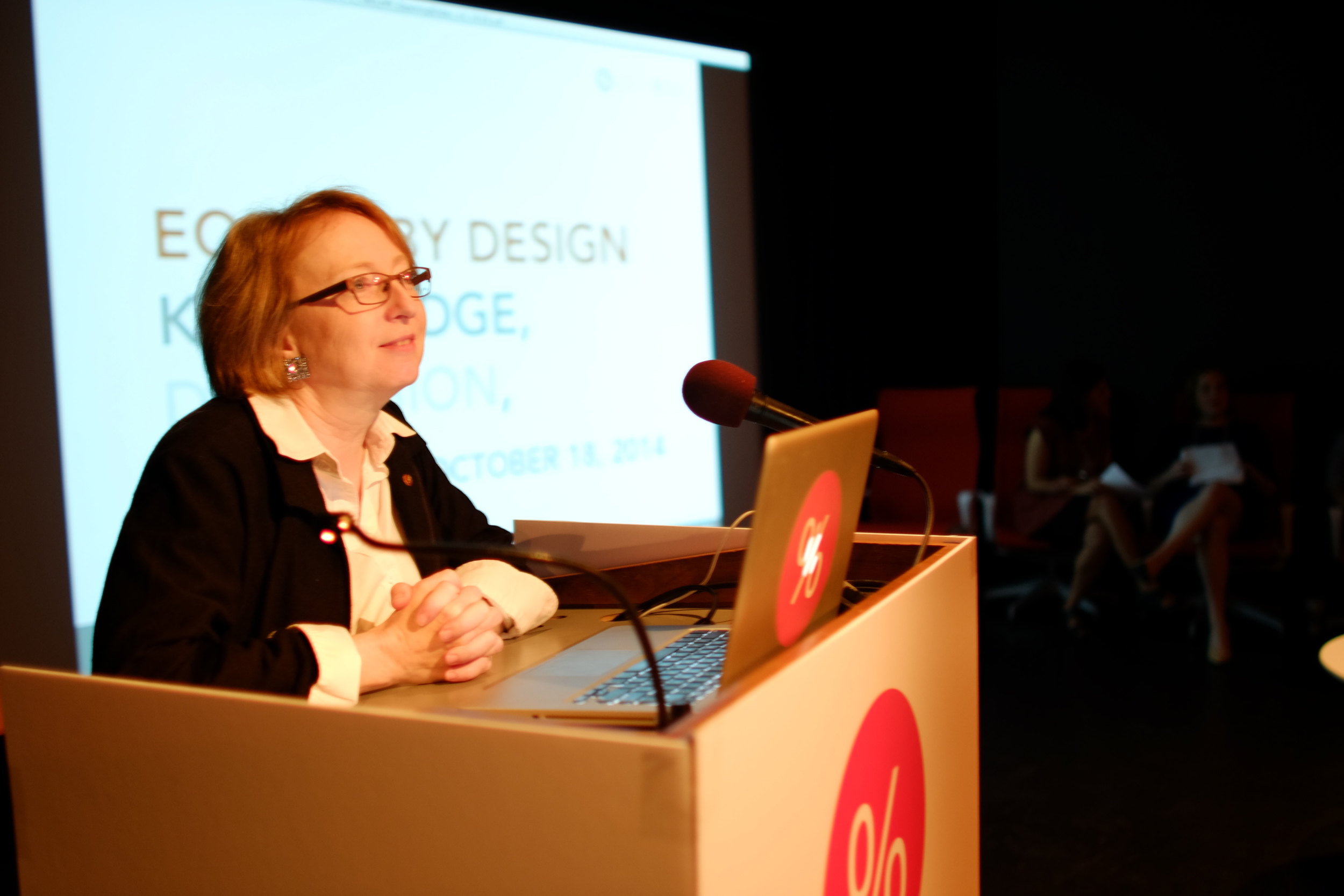
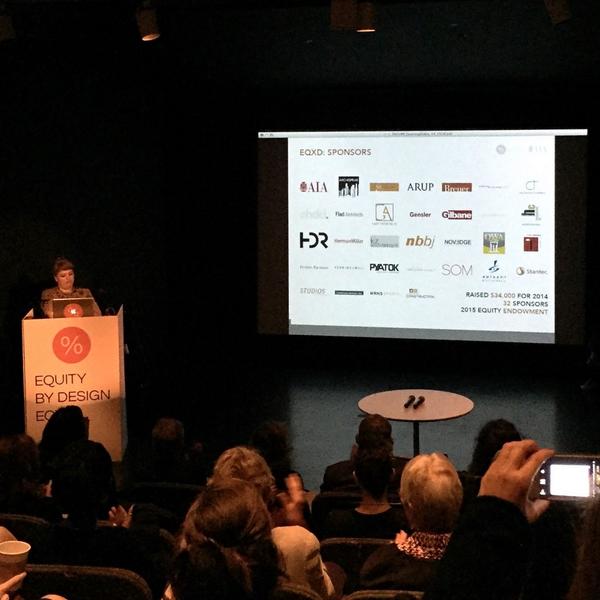
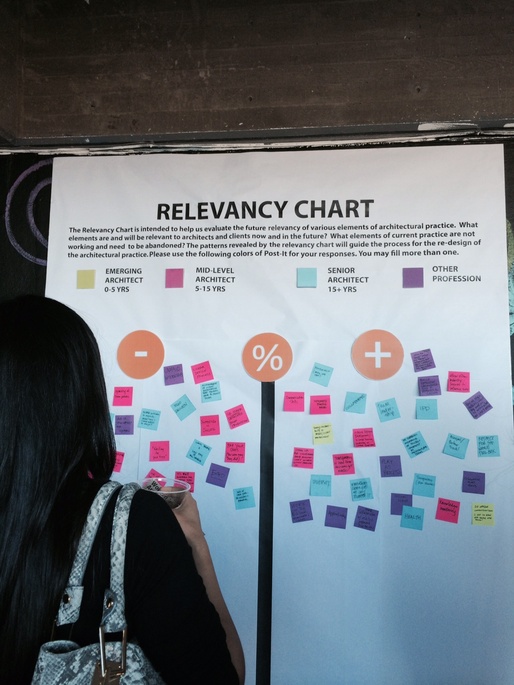
On October 18th for Equity by Design: Knowledge, Discussion, Action!  While we will be sharing the much awaited results of the survey, we will also be asking attendees and supporters to commit with us to make change happen. Whether it is at the individual level for your own professional development, the firm level for mentoring, sponsorship or starting the Equity discussion in your office. Or will you commit to act at the professional level of outreach for practice as an ambassador for Architects to the community? We are at an important point in this nascent movement for Equity in Architecture. Beyond the rhetoric, we want action and accountability. We have the ability to make it happen. Will you join us?

Written by Rosa T. Sheng, AIA, LEED AP BD+C