Blog %

There has been much discussion raised about "Why are women leaving Architecture? and more broadly, Why is the profession losing key talent?"  Both women and men practitioners are disillusioned by the myth of work/life balance: Women are grappling with "have it all" expectations of juggling family time with the demands of full-time work.  Men are struggling to support their families solely on an architect's salary and fall back on asking spouses to maintain their jobs. The lack of affordable childcare and high cost of living only magnifies the challenges.  How did we end up in this modern family dilemma? What can we do to improve the situation?

EQxD Get Real: True Stories of Challenge & Resilience

by Rosa Sheng, AIA

Last month, Architect Magazine featured an article referencing the 2014 Equity in Architecture survey as a catalyst for the conversation; “Closing the Gender Gap: Female architects identify ways that women can push through the traditional career choke points and advance through the ranks in a male-dominated field.”  by Elizabeth Dickinson. Three architects were interviewed for their perspectives on the topic; Julia Murphy, AIA an Associate of SOM in New York City, Kelley Howell, AIA a newly named Partner of Pivot Architecture in Eugene, Oregon  and Janet Tam, AIA founding Principal of Noll and Tam in San Francisco.

While the first comment to the article sparked a slurry of conversation, it highlighted that implicit bias is still deeply rooted in Architecture. The writer's comment highlights what still remains in professional practice; a pervasive "take it or leave it" attitude towards the "tradition" to endure long hours and low pay while disregarding the fact that those tropes are driving talent away from Architectural practice.

Discussion comments to Architect Magazine article by Elizabeth Dickinson

Concurrently, there was a twitter chat suggesting that we continue the conversation started by the Architect Magazine article with a broader spectrum of viewpoints within the profession. Let's get to the heart of the challenges in Architecture from the members of the profession that are rarely heard. In a similar spirit of spontaneity to the idea of the Archimom's Everyday Moments of Truth blog series, we are excited to bring you EQxD Get Real: True stories of Challenges and Resilience from diverse perspectives of architects and designers. Each day we will feature the stories of each person's challenges in the profession and what they learned from those experiences to inspire action for equitable practice in architecture.  Follow #EQxDGetReal on Twitter this week to share all the stories.


Found: The Missing 32%

by Melissa Daniel 

Former AIA Diversity and Inclusion Council member, Melissa Daniel is passionate about changing the culture of the architecture profession. She spent the past three years as chair of the Women in Architecture Series serving AIA|DC, DCNOMA and AIA|NOVA WIA Committee. She was selected in 2012 for the Emerging Architect Award by AIA|DC, 2013 Young Architect of the year by DCCEAS and 2014 Leading Women under 40 by Maryland’s The Daily Record. 

Search until you find your Yes!

by LaShae A. Ferguson, Assoc. AIA

LaShae is the owner of L.A. Design Collective, LLC, An Architectural Design & Drawing Co., and graduate of the University of the District of Columbia. LaShae has co-managed design-construction projects worth over $8 million total. When not working, she enjoys spending time with her family, cooking and traveling.

Control less, Celebrate more, shall we? 

by Katie E. Ray

Katie is an emerging professional who currently lives in Arlington, VA and is an APM for a firm just outside of Washington DC. Her projects currently range from restaurants, bars, spas, and country clubs. She is a mother and yogi; on the weekend she loves spending time building lighting and furniture from salvaged materials.
Is the world ready for real talk?

by Karen E. Williams AIA, LEED AP BD+C, NCARB 

Karen E. Williams is consistently working to educate people about the inner benefits of the architecture community. She is an Adjunct Professor at the University of Oregon where she teaches Revit and Professional Practice. As a means to be professional example, Karen is on the AIA-SWO board and supports STAnDD a local student group. She joined PIVOT Architecture in 2014 as a Project Architect after practicing on the east coast for 9 years.

The Long and Winding Road

by Tara Imani, AIA 

Tara Imani Designs, LLC is a premier full-service architecture and interiors solo practice, founded and led by Tara Imani, AIA. Ms. Imani is a licensed Architect in the State of Texas and a graduate of The Ohio State University with a Bachelor of Science Degree in Architecture. Ms. Imani is also an active voice on social media and advocate for Equity in Architecture.


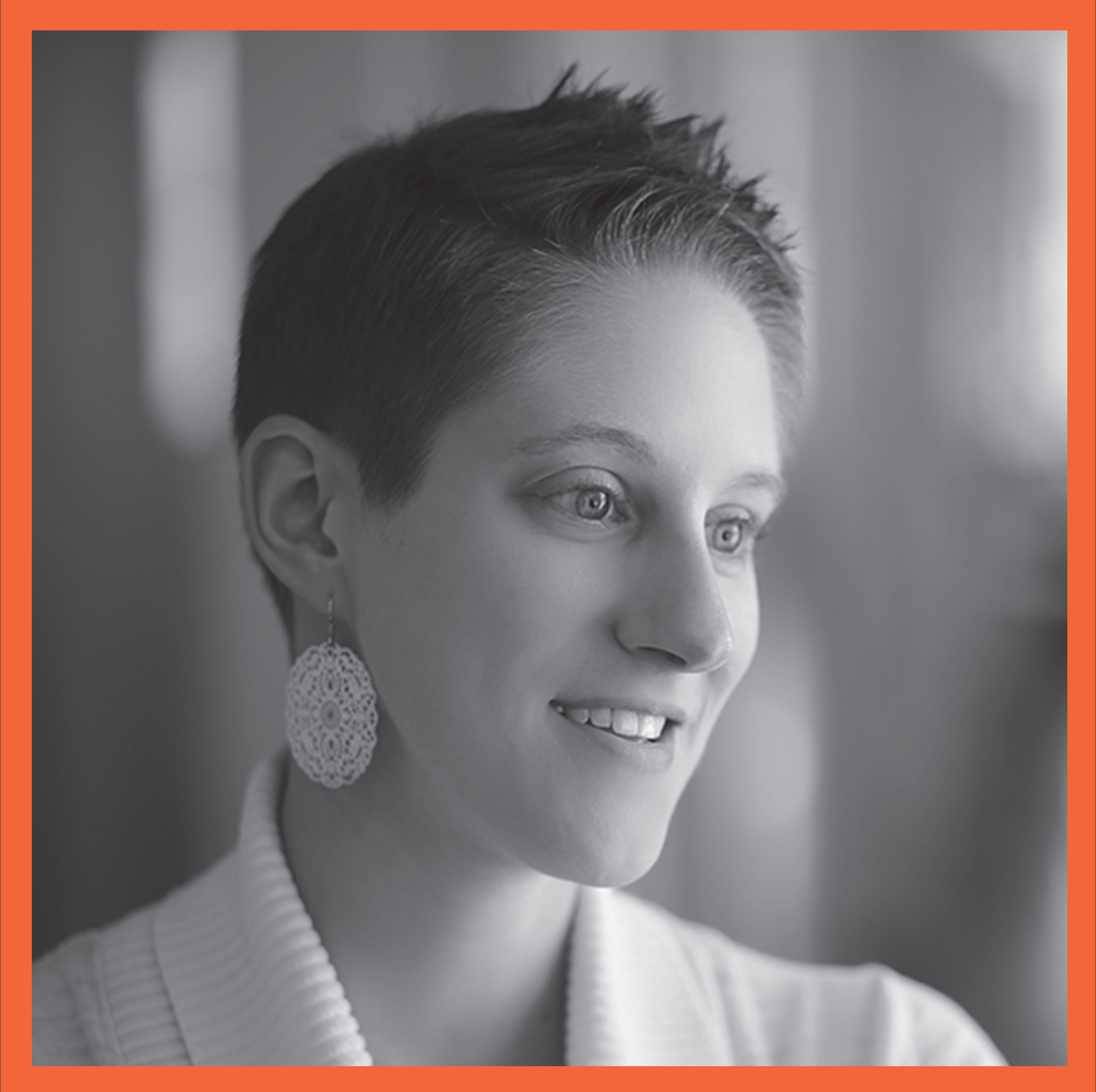
Meet our EQXD HACKATHON Scholarship Recipients!

by Rosa Sheng, AIA

We are really excited to announce our 5 Scholarship winners for WE310 Equity by Design: Knowledge, Discussion, Action! Hackathon on Wednesday, May 13, 2015. Special thanks goes to our generous Equity by Design / AIA Convention event sponsors: Autodesk, McCarthy Building Companies and WRNS Studios for providing this opportunity for the future leaders of our profession.

Melissa Daniel

Former AIA Diversity and Inclusion Council member, Melissa Daniel is passionate about changing the culture of the architecture profession. She spent the past three years as chair of the Women in Architecture Series serving AIA|DC, DCNOMA and AIA|NOVA WIA Committee. She was selected in 2012 for the Emerging Architect Award by AIA|DC, 2013 Young Architect of the year by DCCEAS and 2014 Leading Women under 40 by Maryland’s The Daily Record.

The goal [of attending this hackathon] is to take the knowledge and apply it to the AIA|NOVA Women in Architecture committee.
— Melissa Daniel

Matthew Gaul 

Matthew is a junior designer at BAR Architects, Chair of Bay Area Young Architects, a contributing member of Equity by Design, a son of good people, and a husband to an intelligent and passionate wife. He is learning a lot from all of his roles. He hopes to make the world a better place.

Attending this Hackathon will better equip me to pursue Equity as the leader of my firm’s Equitable Practice group.
— Mathew Gaul

Morgan Maiolie

Trained as an architect with an emphasis in urban design, Morgan Maiolie’s passion lies in designing within the complexity of ecological and urban systems. After working in a sustainable building research lab, urban renewal agency, and architecture firm, Morgan left traditional practice to pursue freelance design in a collaborative and creative co­working environment.

I see great value in a hackathon to develop equitable practices in architecture and I am personally motivated to be a part of that discussion. My experience remains difficult to talk about with my immediate architecture community and a forum dedicated to the topic with people equally ready to begin that conversation would give me a much-needed structure to begin.
— Morgan Maiolie

Karen Robichaud

Karen leads the online engagement strategy at Payette and since joining the firm in 2012, developed staff on-boarding programs, a clear voice for the firm and strategies for success. Additionally, Karen leads discussion groups, exploring how firms can incorporate social media to their marketing strategies and educate firm leadership.

Post Hackathon I plan to bring the exercises, lessons learned and messages shared back to my firm and my local AIA chapter. By adding another, well-informed and active voice to the project, I can help move the conversation forward as an individual and from a firm-wide perspective.
— Karen Robichaud

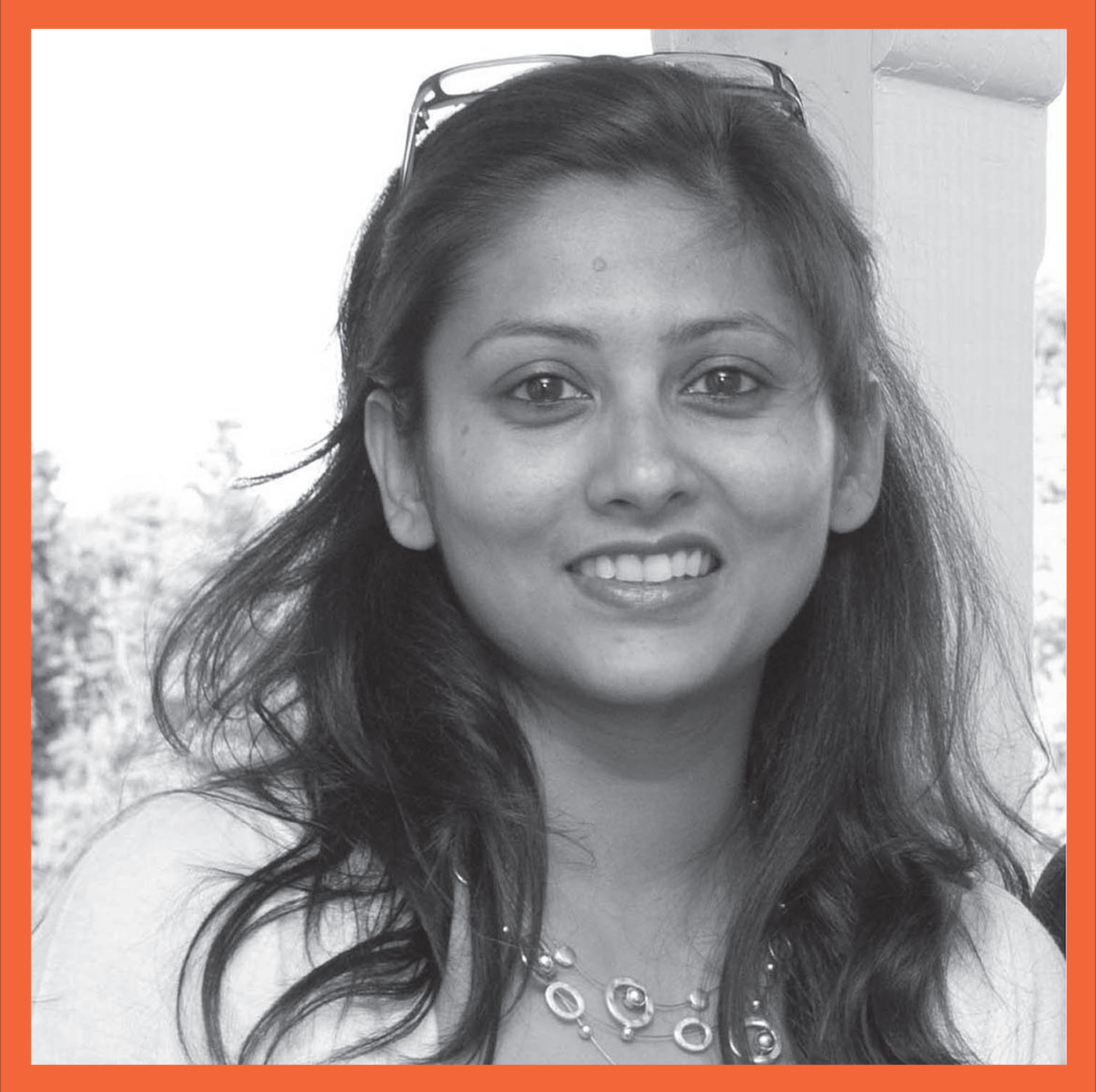
Neelanjana Sen

With 350,000 sf. of built work Neelanjana has interest in micro and macro aspects of planning and design. Her background in Physics, Visual Arts and Architecture informs her understanding of both aesthetic and technical aspects of built form. A graduate of Rensselaer Polytechnic Institute she received the AIA Henry Adams award.

How we apply that ability to change into our thinking pattern and bring creative response from within us is the challenge. I want to attend this workshop to understand how to question my thought and develop the alternate. I believe small and subtle interventions can bring big change.
— Neelanjana Sen

_________________________________________________________________

EQxD Hackathon in ATLAIANTA!

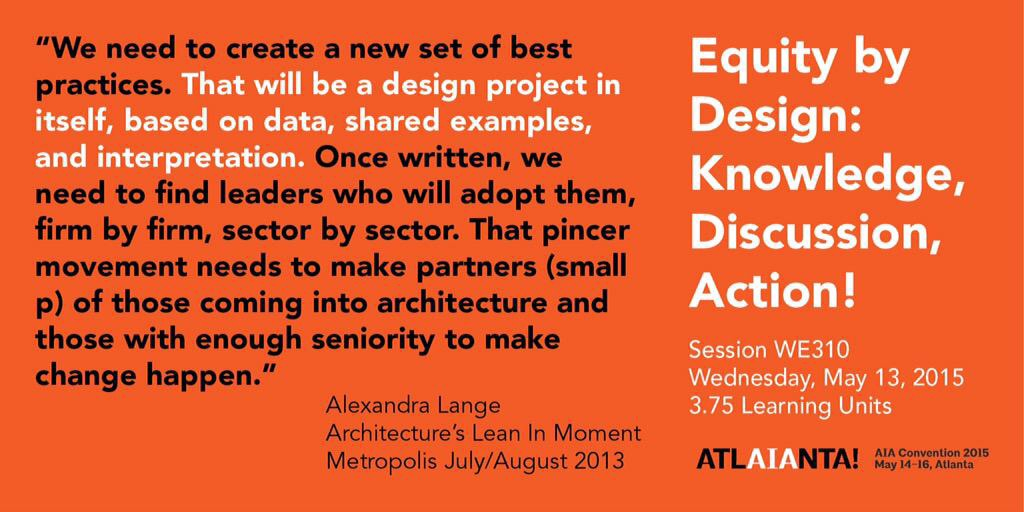
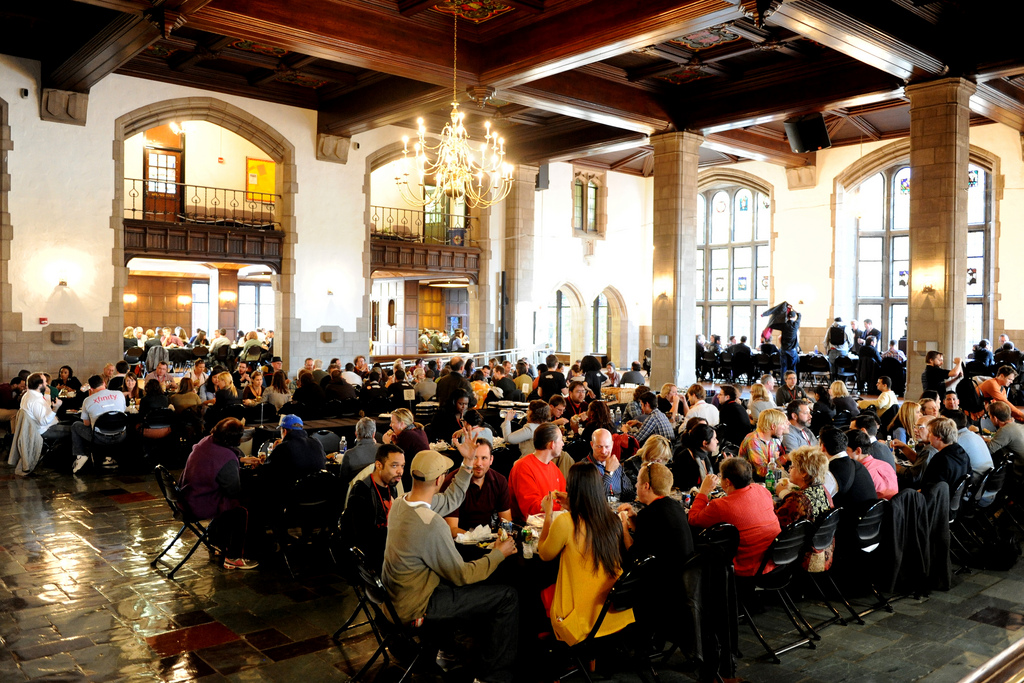
From Silicon Valley to Atlanta, we are excited to bring this energizing, innovative and fun learning opportunity to AIA National Convention. What is a Hackathon? To find out, join us for this special pre-convention workshop on Wednesday 5/13 1-5pm WE310 Equity by Design: Knowledge, Discussion, Action! Full details and registration information available here.

REGISTER FOR WE310 EQXD HACKATHON & HAPPY HOUR

PERFECTING YOUR PITCH!

by Lilian Asperin Clyman

As part of our recent EQxD monthly meeting we organized a break-out session to explore what makes a pitch great. It has been four days since that event, and today I am testing my memory to recall which teams were most effective in conveying their insights.  This is exactly the difference between a great and not so great pitch.  Are people still thinking and/or talking about it days, months and years later? And if so, why?

Intense Curiosity

The greatest problem solvers identify an area of need and devote deeply focused time to discovering everything about it through their own lens. In so doing, they are able to work through the layers of commonality and get to a new insight. This curiosity spark is the basis of breakthroughs and pivots. The hallmarks of change emerge when you identify it, name it, pin it up, and keep staring at it.

Piercing Content

Solutions are for people and the more universally resonant you can be, the more people “gotta have it”. In other words, sift through  long enough to find your “I believe” statement.  At all times, you and your team must be able to say “Why” this matters and every decision you make is in service of this belief.  If you are clear, people will follow.

Get to A-Ha

So what? Always ask yourself why your proposal is relevant.  Our goal is to arrive at solutions that can transform real life experiences of professionals in our industry.  Is there a specific demographic you understand exceptionally well that you can empathize with, and therefore impact? Translate your individual insight to transform a shared goal. People need to get it.

Catchy Message

“Just do it”. “Got milk?” “Think different”. “Architecture Matters”. Appeal to as many senses as possible and have an element of surprise.  Use every available tool to explore how you can be original AND succinct. Words. Images. Beats. Songs. Touch. Smell. Movement. Interpretive dance. Consider how you thread each essential element of your idea purposely so as to build a crescendo in your audience. Remember, humor and authenticity will always create a bond among people. Make it memorable.


Say it with your heart and with your mind.

EQxD Hackathon in ATLAIANTA!

From Silicon Valley to Atlanta, we are excited to bring this energizing, innovative and fun learning opportunity to AIA National Convention. What is a Hackathon? To find out, join us for this special pre-convention workshop on Wednesday 5/13 1-5pm WE310 Equity by Design: Knowledge, Discussion, Action! Full details and registration information available here.

REGISTER FOR THE WE310 EQXD HACKATHON & HAPPY HOUR!


Read past blogs by Lilian Asperin-Clyman about the EQxD Hackathon experience:

Learning from Silicon Valley

Anatomy of the EQxD Hackathon

Meet the EQxD Hackathon Jurors!

Perfecting your Pitch!


EQxD @ TEDxPhiladelphia 2015: And Justice For All

We are pleased to announce that Rosa Sheng will be speaking about Equity by Design: Knowledge, Discussion, Action! on Thursday, June 11th at TEDxPhiladelphia 2015: And Justice For All. Please visit the official website for full program information, speakers, and tickets. 


About: Equity by Design: The Missing 32% Project

Fueled by the persistent and striking gender inequity within architectural practice, where women compose only 12–18 percent of AIA members, licensed architects, and senior firm leadership, Equity by Design (previously known as the Missing 32% Project), a committee of AIASF, was developed as a call to action for both women and men to help realize the goal of equitable practice to advance architecture, sustain the profession , and communicate the value of design to society. The group's work has been featured in the Wall Street Journal and major architectural publications including Architect Magazine, Architecture Record, Contract Magazine. In 2015, Equity by Design has been presenting the findings in numerous cities nationally (including Boston, New York, Portland, Austin, and Atlanta for the AIA National Convention) and internationally in Lisbon, Portugal for Matrices: The 2nd International Congress of Gender and Architecture. 


Our mission is to understand the pinch points and promote the strategic execution of best practices in the recruitment, retention, and promotion of our profession's best talent at every level of architectural practice.


Rosa T. Sheng, AIA, founded AIASF Equity by DesignThe Missing 32% Project in July 2013. She joined Bohlin Cywinski Jackson in 1997 and helped start the firm’s San Francisco office in 1999, while serving as the project architect for Pixar Animation Studio’s headquarters in Emeryville, CaliforniaAs Senior Associate and licensed architect with 21 years experience in Architecture and design, Sheng has led a variety of award-winning and internationally acclaimed projects; from the aesthetically minimal, highly technical development of the glass structures for Apple’s original high-profile retail stores in New York and San Francisco, to the innovative and sustainable LEED NC Gold–certified Lorry I. Lokey Graduate School of Business at Mills College in Oakland, California. She was recently part of the team for the headquarters of e-commerce startup Square and is currently working on innovative projects for the University of California, Davis and Dominican University of California in San Rafael.

About: TEDxPhiladelphia 2015: And Justice For All

The fourth annual TEDxPhiladelphia conference will be held on Thursday, June 11, 2015 at Temple Performing Arts Center. “And Justice For All” – the final four words of the Pledge of Allegiance – embodies the powerful and timely theme of the conference this year. This exploration of access and equity will showcase great ideas for building more just cities. TEDxPhiladelphia has convened a diverse speaker roster representative of today’s leading thinkers who will connect with over 1,200 multigenerational attendees and an ever-growing online audience on conference day and beyond. 

TEDxPhiladelphia is a not-for-profit initiative, licensed by TED and created in the spirit of of the TED conference and its mission, “ideas worth spreading.” TEDxPhiladelphia events offer interactive, immersive experiences for all participants from speakers to attendees.

MEET THE EQxD HACKATHON JURY!

by Lilian Asperin-Clyman 


Each one of our Jurors has a story to tell about an experience that took them to that place just outside of his or her comfort zone.  That’s why they are perfect to collaborate as Jurors for the EQxD Hackathon. They share a passion for working on “firsts” and not being afraid to find the path (or the support network) to move from idea to realization.  Our selection of Jurors is diverse by design, thereby representing a collective and multivalent discussion informed by gender, cultural background, role in the AEC industry, and years of experience.

Obiekwe “Obi” Okolo: AIAS Vice President (2015), Musician, Designer, Millennial

The unique experience of living in Lagos, Nigeria during childhood shaped Obi’s perspective and passion for doing good for the world. To gain greater understanding about design, he studied at the University of Texas, San Antonio (UTSA), where he received a degree in Interior Architecture.  Concurrent with his studies, Obi immersed himself within the community of fellow students and served as Chapter President of the American Institute of Architecture Students (AIAS) for two concurrent years.  It was during that time that his began working on aid-based design – a way to blend humanitarian efforts and entrepreneurship. When you get to know Obi better, you learn about his love for listening to and playing music.  So, of course, we have asked him to review our Hackathon playlist!  
“Now more than ever we must be conscious of the things we do and the way we do them. We can’t be afraid to ask challenging questions about the direction of Architecture. As our profession rapidly changes and evolves, it is crucial that we have leaders in place who are not afraid to ask those questions. Powerful women and men who don’t mind rocking the boat a bit if it means a brighter future for architecture and architecture students alike. That's how we achieve equity, ­ constant discomfort and self-reflection." – Obi Okolo
 

Curtis Rodgers: BASCS President, Hacker, Field Solutions Manager, Gen X

Curtis has assembled a series of experiences and educational background which culminates in what he does as a member of McCarthy Building Companies today.  As a student at Texas State University in San Marcos, he obtained a Bachelor of Business Administration and a Master of Science in Technology.  Curtis changed his direction with time in the field, originally as a Construction Engineer for Kiewit then moving to San Francisco to join PlanGrid’s Operations team.  With such a unique blend of skill sets and first-hand experience in construction, Curtis has been focusing on how to bring value through efficiency.  To achieve this, he crafted the differentiating role Field Solutions Manager with current employer, McCarthy Building Companies.  When he is not in problem-solving mode, he likes to shoot sporting clays or go mountain biking with his girlfriend.

“User interface design, enterprise technology, and robotics have matured to the point that many AEC challenges are now addressable. Those who understand both the problems that need to be solved and the technologies available will thrive, as they improve the quality of life and problem solving capacity of our incredibly hard working AEC community.” – Curtis Rodgers

Melinda Rosenberg: WRNS Studio Partner, Architect, Director of Human Resources, Boomer

Melinda has always been curious about understanding and shaping culture. She arrived at WRNS in 2005 and helped open their doors, ushering in the vibrant, creative, diverse and hard-working ethos that has helped WRNS become the nationally recognized design firm it is today.  WRNS is truly about its people, and Melinda has recruited and helped retain the best. Since day one, they’ve attracted an incredibly talented group of designers and professionals who are committed to good design, social and environmental stewardship and critical discourse.  With no shortage of parties and social outings, Melinda knows how to balance the culture of hard work with play.

“The opportunity to be involved in the work, growth and culture of WRNS since its launch has been hugely rewarding. We are a very different Studio than we were at year 1, when we started with 5 folks and have grown to 75.  “Building” a studio is not too different from what I enjoy most – being a tourist in my own city. The energy and staff in the Studio has always kept me driven to keep exploring, evolving and improving.  This is a great time for Architects and the Bay Area, I’m so proud to be a part of it.” –Melinda Rosenberg


EQxD Hackathon in ATLAIANTA!

From Silicon Valley to Atlanta, we are excited to bring this energizing, innovative and fun learning opportunity to AIA National Convention. What is a Hackathon? To find out, join us for this special pre-convention workshop on Wednesday 5/13 1-5pm WE310 Equity by Design: Knowledge, Discussion, Action! Full details and registration information available here.

Can't make it to the Hackathon? Join us for the recap, jury results, and networking at Studio No. 7 which is walking distance from the Georgia World Congress. 

If you are a student, emerging professional, or newly licensed architect, we have scholarships to WE310 EQxD Hackathon thanks to the generosity and support of our sponsors, Autodesk, McCarthy Building Companies and WRNS Studios. 

Register for WE310 EQxD Hackathon & Happy Hour

Read past blogs by Lilian Asperin-Clyman about the EQxD Hackathon experience:


Learning from Silicon Valley

Anatomy of the EQxD Hackathon

Meet the EQxD Hackathon Jurors!

Perfecting your Pitch!


Anatomy of the EQxD Hackathon

by Lilian Asperin Clyman


Hackathons provide an energizing and alternative method to discover, unleash, and create through proximity, design thinking, and technology.  It’s what happens when you incubate passion with talent and suspend fear. It’s a mash-up for risk-taking that leads to transformational results.

Time is a fascinating influence in Hackathons.  Perhaps an irony we are nostalgic about is that more time equates to better results.  Discard that – we are not looking for perfection, we are looking for bold innovation.  Ask "Why Not?” five times in a row to identify the core of your disruptive idea.

Why Hack?

I have always believed that those who are meant to meet find each other in due time. Hackers find themselves gravitating towards other folks who share a passion or something (or approach) you have been pondering for a while. At Equity by Design we seek data that informs our activism. We are looking to form affinity groups of people who resonate with a finding from our survey and have a yearning to influence different outcomes.

TED Talk by Catherine Bracy: Why Good Hackers make Good Citizens

Flipped Classroom

For the AIA EQxD Hackathon, you will have homework but other than that, all you are required to do is come refreshed and ready for a solid day. In borrowing the modern concept within Higher Education, we will introduce you to key data from our Survey and brief summaries from the content sessions we organized for our Symposium via the Flipped Classroom model. It’s a packet of information for self study, which will serve as the foundation you need to be prepared to work with a team. In this packet you will find a summary of the Goals, Format, Organization for the Hackathon, Survey Data, a graphic depicting “Life of an Architect” - a visual narrative of a sample professional journey, a range of topics ripe for “hacking”, and a helpful set of guidelines for crafting an effective and engaging message to depict your proposal.

Time Will Fly

It’s ok to anticipate a little chaos. Suspend wanting to know what and when and linger longer in why and how with your teammates. These are the ingredients of your first exercise: Diverge and Converge. Leverage the diversity of your group to consider the points of view of your audience. The most transformational hacks will get at the root of a real need. Go for quantity of ideas, then Deliberate and Discard. Adopt the mindset of why your idea matters and get ready to “sell” it. Develop and Clarify. Many great ideas die at the vine because they are not communicated well or succinctly. Be strategic in how you design your presentation.  

There will be a Winner

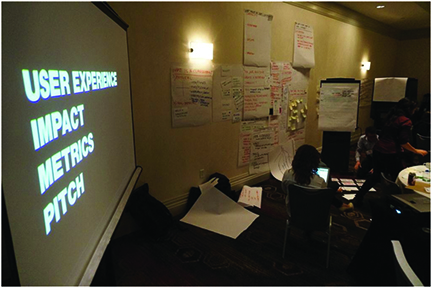
You will have 5 minutes to make an impression to invited jurors during Happy Hour. In anticipation of this milestone for the day, we are sharing the criteria for evaluation.  Think of this as your pitch to venture capitalists - people who can help you  realize your idea. Please keep these in mind as you read the Flipped Classroom packet, engage in the Hackathon, and present.

User Experience: human-centered insight                                     5 points

Impact: innovation; relevance and impact on profession       5 points

Metrics: plan for action, deployment and evaluation               5 points

Pitch: quality and uniqueness of message/creativity              5 points

Diverse voices are needed to shape the future of our profession. Hope you can join us; we need to hack more!

Don't forget to register for AIA Convention by April 15th to get the advanced convention admission pricing. If you are a student, emerging professional or young architect interested in attending the Hackathon and Happy Hour, submit for the Scholarships donated by our EQxD Hackathon Workshop Sponsors: McCarthy Builders, WRNS, and Autodesk by 4/20.


Next Blog: Meet the Jurors!

Use Your Own Voice

by Emily Grandstaff-Rice AIA

To make effective change in the architecture profession, you must use your own voice.

I knew this in my heart, but sometimes I need to convince my head a bit more. Last October I was asked to give the opening remarks at The Missing 32% Project Equity by Design Symposium. I was so honored and humbled to be considered; of course, I said yes immediately. I had been following The Missing 32% on Twitter and Facebook. I participated in their survey of over 2,289 respondents on identifying gender-specific impacts on careers in architecture. I was in! But then I realized I had never spoken so publicly about my experience as a woman and an architect and I was terrified.

Emily Grandstaff-Rice, AIA Keynote at Equity by Design Symposium, October 18, 2014

Emily Grandstaff-Rice, AIA Keynote at Equity by Design Symposium, October 18, 2014

Below are excerpts from my speech from October 18, 2014

Celebrating women in architecture

Celebrating women in architecture seems like an easy issue, right? Especially in this crowd today… that’s what we do. I was fortunate enough to attend last year’s AIA Women’s Leadership Summit and was impressed by the depth and the breadth of the work featured, but I heard the same reoccurring question: are we as women significant because of the work that we do or is our significance in that we work in the architectural profession despite being a woman? And those are the two central questions around recognizing women.

Since we are here today to talk about equity—what I believe is a positive, aspirational state of affairs as opposed to inequity—I will start with an acknowledgement that architecture culture is flawed. And this is no shocker, we know it’s flawed. And it’s flawed because it’s a practice powered by people… and people are flawed, but luckily people have the power to change. It’s not a machine; we’re pretty easy to rewire—you just have to change minds.

I didn’t become an architect to be placed on a gender pedestal. I struggle with the term ‘woman architect’. When people say ‘woman architect’ around me, it makes me cringe especially when I expect to be acknowledged for my work and then someone puts on the subtitle, ‘and also you’re a woman…”

When we speak about celebrating women in architecture, it’s more than just our culture, we also need to address it from a public standpoint. I’ll give you a little story… A couple years ago, I went to a high-profile gala for the grand opening of a project I was working on and I had a nine-month-old at the time. I was not going to bring my kid to a fancy event and my husband offered to stay home. At the gala, I happened to be standing next to a well known reporter in Boston who was there with her husband. I introduced myself and mentioned I was an architect who worked on the project and she said, “oh, that’s great. I was just talking to the client and he was telling me this story about how one of the other architects just had a newborn baby and wasn’t quite sure if he could come to the gala,  but his wife was so generous and told him ‘honey you go, enjoy yourself. Isn’t that a great story?’

Of course, the reporter assumed that the architect in the story was male. I was mortified, but I realized then I had a choice. I could easily let her continue with her assumption, or I had the power to change her perception.

At first I’m shocked—and then I collected myself and said, no I’m the architect you are referring to.

There’s a public image of women in architecture that we have to address. For example, if you are the general public—which you’re not—but if you were… this is my question to you: Who do you think the general public thinks is the image of an architect?

At this point, the audience mentioned three names: Frank Lloyd Wright, Frank Gehry, and Howard Roark. My experiment was working.

And then look at this room.

The room was filled with architects--both men and women.

There’s obviously a disconnect between the public perception of an architect and those of us who are here today. So within architecture culture when we see a woman succeed, it’s fulfilling; it’s a celebration and a reminder to us of our special status. But we must be careful that we don’t hold women to too high of a gender pedestal so that they come to represent all of the women. In other words, we put undue pressure on them.

Be real. Be resilient. And be the innovation that you want to see.

Evelyn Lee AIA, Emily Grandstaff-Rice AIA, Virginia Marquardt AIA, Elizabeth Chu Richter FAIA,

Evelyn Lee AIA, Emily Grandstaff-Rice AIA, Virginia Marquardt AIA, Elizabeth Chu Richter FAIA,


Equity is for everyone: A much needed conversation

Equity is for everyone and let me flip the tables for a moment and focus not on the 32% but the 18% of which are represented here today. We are the survivors. We’re the ones who despite all the research and data that you will hear today still practice architecture and no one needs to convince us why architecture matters. We get it, right? Because we are the survivors we are also uniquely positioned to the be group to work for solutions to this problem and we can’t do it alone.

Then I mention the whale metaphor that Rosa Sheng often uses to describe the task of Equity by Design. A must-read is her post How to Eat a Whale and Other 2014 Resolutions.

Rosa’s whale metaphor is both humorous and true. Changing architecture culture will take time and effort. When I look at the whale it feels like it’s almost too much to take on, but as we know—one bite at a time. The concept that there is one perfect pathway to practicing architecture (i.e. the traditional firm setting—all that fun stuff) denies the experience of those of us who have charted our own path for the flexibility, significance, and team comradery that frankly keep us in architecture.

So this is our whale and here’s your guide to eating it:

  • If you see inequity, name it.

  • If you observe privilege, talk about it.

  • As Roxane Gay eloquently states, “we need to get to a place where we can discuss [gender and racial diversity] by way of observation and acknowledgement, rather than accusation.”

This is why I view the Equity by Design survey results and today’s symposium as a huge step forward in the equity conversation.

We also need to acknowledge the generational rift even amongst women. Saying that inequity isn’t as big of a problem today as it was 20 years ago may be true. We know that the numbers are changing, but then again it’s still a struggle. I’m reminded in my daughter’s preschool, they have a saying, “Don’t hurt others’ hard work.” Dismissing the concerns of emerging professionals on the inequity issue because the numbers are trending positive creates undue resentment, in other words everyone has hard work and we need to remind ourselves of that. We should acknowledge the hard work of all, but also recognize that hard work will always be a relative term. Hopefully it gets a little easier.

Our greatest power is our voice: Architecture as storytelling

So our greatest power is our voice.

Each one of us has our own agency and our own voice. While there are many mediums—Twitter, writing, speaking, design, collaboration—our voice is a way of communicating experience. When my four-year-old daughter has for example something to say, I know it. She’s found her voice. I laughed when #banbossy was launched and because I get to mentally reframe her tantrums as future executive presence. …and I don’t feel so bad as a parent.

Using our collective individual stories like The Missing 32% Inspire% series describes a new practice where differences in working are celebrated, where recognition is not tied to the number of hours worked, where flexibility is seen as an asset, where teamwork and collaboration is the norm, and where we change people’s lives, because we do.

These are the stories I want to hear…

Be bold and be explicit. Why does architecture matter?

We need to say this in our voice—our own voice over and over again to change the public perception of what an architect is. But more importantly, the diversity of architects out there, so more names come to mind than Frank Gehry, Frank Lloyd Wright, and Howard Roark. So here are some prompts on why architecture does matter…

  • Why is what you are working on changing people’s lives?

  • We change people’s lives and I struggled with that when I was an undergraduate. I have come to terms with the fact that my work has significance beyond the day-to-day.

  • And why does equity in architecture matter?

So, use your voice. This is how we’re going to eat the whale. One bite at a time.

Until our profession reflects the society we serve, we will not have completely fulfilled our potential. Our work is not done, but then again when is architecture ever done? That is its beauty.   

Our engagement is a key value proposition, so we—men and women—need to engage the profession and the public about the value of good design, but also diversity and equity in architecture.
Since last October I have realized that I needed to listen to what I was saying over and over again. I have been more empowered to identify inequity when I see it. There is so much work to be done and the next step is the WE310 Workshop on Wednesday May 13 1-5pm Equity by Design Hackathon at the 2015 AIA Convention. I am so excited by the future of architecture, but most importantly I am also excited to use my voice to be part of the conversation.

Scholarships for students, emerging professionals and new architects are available to attend WE310 EQxD Hackathon and Happy Hour! Applications are open through Monday April 27th and Winners will be announced the following week, May 4th. Apply today!

Apply for WE310 Scholarship

Learning from Silicon Valley

by Lilian Asperin Clyman

A few miles to the South of San Francisco, there are incredible hotbeds of innovation. I wondered…What are the attributes of the cultures that create the types of things, gadgets and ideas that are evolving the quality of our lives?

What I Learned about Hacking: A Weekend in March 2013

I attended the inaugural AEC Hackathon on a whim and with no expectations.  It was the same feeling I had on the very first day of College at Cal.  My internal voice said: “Show up, figure it out, have fun and never look back”. Within minutes, what looked like “speed dating” started to take place and it was a rush of meeting a person then understanding what their passion was about.  I soon learned that these are precious minutes for first impressions, and that no one has any emotions hurt if you meet, chat, then decide to continue looking for a match.

encouragewildideas

One of the giant posters on the wall said“Move Fast and Break Things.” Something really authentic happens when you have nothing to lose and everything to gain.  When you all find yourselves saying “Why Not?”  It’s a sea of explorers who have zero fear in their heart or mind. We were at Facebook’s campus, with an open kitchen fully stocked with sugar and caffeine to be complemented by a mountain of pizza boxes and more snacks throughout the evening.

A group of us decided to start hacking.  We wanted to dive in and think of a cool app or product prototype to build.  Our two coders (one from New York and one local) were amazing contributors to the conversation among otherwise architects and builders.  We sketched on yards and yards of trace, and summarized our discussion into doodles.  What is art? What is space? What makes a team tick? How do we elevate the AEC community? Is it a better 3d modeling software? What would we want to document? Why don’t we learn more from the folks in the field? How do we make better and more efficient environments for human beings?

A brilliant question came from Boris, one of our patient coders.  He asked us to think about the root of our discussion more and to not be afraid to embrace the fundamental challenge.  “Why don’t you hack the process?” It was a breath-taking, clarifying moment.  Almost immediately all us started working quickly and to our individual strengths, but within the collective.  The builder who loved story-telling starting outlining how we would approach our diverse audiences. The designer thought about whether or not there is an optimal time in a project for material selection. I began diagramming how we currently do things as a backdrop for our “Hack”. It was a good lesson – we all work well, fast and with joy when we are working to our strengths.

AEChackathon

Our Hack

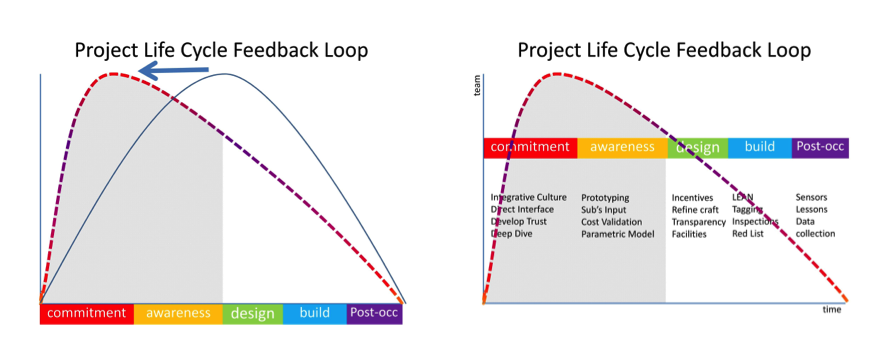
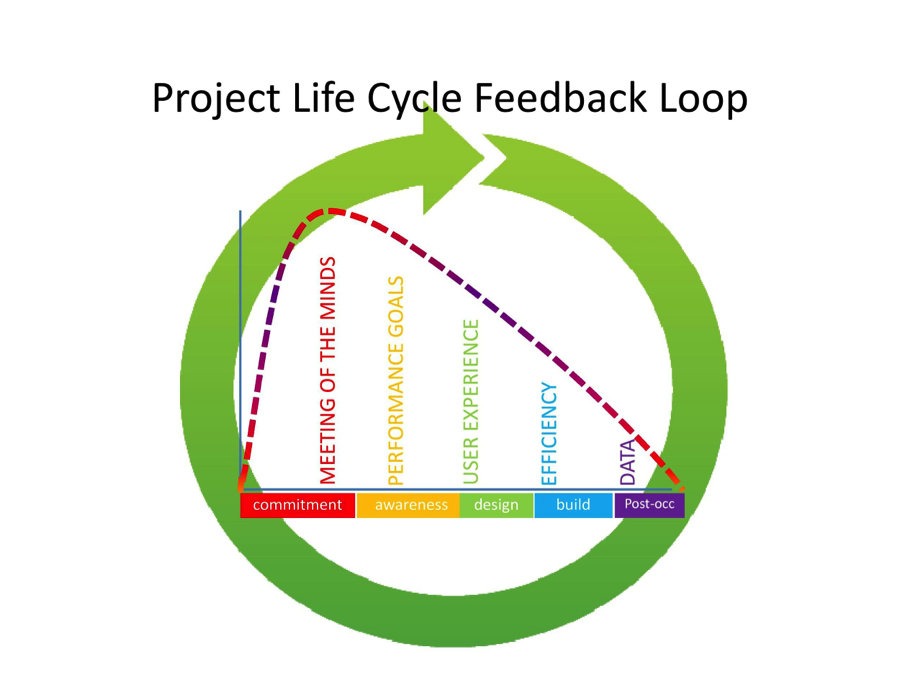
Our team consisted of 3 architects, 3 contractors and 2 coders.  We were very interested in how we could bring innovation to design and construction so that we could create a process of high-touch (empathy and user interface), improve energy performance, create buildings that are smart and adaptive, and ultimately deliver extraordinary human experiences.  Our traditional method has us working in silos, linearly, with the team being the largest during construction documentation phases - which is NOT where we believed great, transformational value is identified or delivered. We affectionately referred to this as “moving the belly” of the project from the midpoint to the inception. Video here!

AEChackathon2

Game Changers

We proposed to develop a feedback schema for the AEC industry.  Everyone and every thought would be located in one shared Model as a communication platform.  This would allow us to collect and publish best practices emerging from Integrated Project Delivery contracts, Big Rooms, Studios and Field Work.  In our minds, data would be processed into information, which would then lead to knowledge and ultimately wisdom. The value of design and construction would be elevated as we would be able to tell compelling stories about what has quantifiable benefit on human experience.

Hacking for Good

Post First AEC Hackathon, I caught the bug big time.  Where are other areas in our world where there is a need for innovation? So, the fearless adventurer in me found two partners within SCUP (Society for College and University Planners) and we led the very first Hackathon at the Pacific Region’s annual conference.  We dedicated the day to exploring the subject of MOOC’s (Massive Open On-Line Courses), which is a topic many see as either the future of Higher Education or a disruption to avoid.  A perfect topic for thinking outside the box, analyzing through the lens of empathy for students, and considering how learning and teaching experiences are so fundamental to our next generations.

AEChackathon4

This year, I am enthusiastically leading another Hackathon with other architects, this time at the AIA National Convention. Combining the format for the hackathon with the evolving methodology for teaching/learning known as the Flipped Classroom, we will distribute the results of the 2014 Equity in Architecture Survey to participants, and we will ask them to come ready to propose new models to solve challenges within the profession of Architecture. How do we hire and retain the best? What do we do that helps us grow and develop as creatives? Why do we do what we do and is it meaningful for us and relevant to our world?

(WE310) Equity by Design: Knowledge, Discussion, Action! 5/13 1-5pm at AIA Convention, Atlanta.

Which Craft?

By Rosa Sheng, AIA, LEED AP BD+C

This post is a contribution to a group series called #ArchiTalks in which Bob Borson "Life of an Architect" gives a theme or a set of questions and we participate with a blog response… this month’s theme: "Crafty". When Bob sent out the email for this topic, I'll have to admit the theme "Crafty" threw me for a serious loop.  My preconceived notions of "Crafty" had so many competing definitions and interests. So for the sake of my own bias and writer's block, I abbreviated "Crafty" to just plain "Craft". 

The act of deciding which "Craft" to write about was still difficult; but it did create a fun play on words for this blog title; Which Craft? In the previous Architalks #5 A few of my favorite things, an entire section was dedicated to the topic of "making things"; Real food, play food in the form of felt dim sum, custom knit creations, fashionable bags out of remnants and watercolor sketches.  So now what?

 I typed "Craft" into the Google search, which resulted on the following:

  1. An activity involving skill in making things by hand.
  2. Skill in carrying out one's work. "a player with plenty of craft"

An then a moment of clarity. 

"Craft" in the context of being an architect has new potential for innovation.  Over the centuries, an architect's skills and expertise have transformed from the direct "hands on" making or actual construction (Skill in making things by hand) into a less tactile relationship with the end result. The "Craft" of an architect as designer, coordinator, and manager has become removed from the actual process of making buildings and, given the advancement of technology, has evolved to design and communication of construction knowledge (Skill in carrying out one's work). Born from this challenge is the opportunity for innovation. How do we as architects reconnect to our roots as makers and communicators in the Information Age within the context of the Digital Revolution and the rapid rate of development? How do we reconnect with the culture of craft in a real and tangible way beyond the rhetoric?

Codex Atlanticus by Leonardo da Vinci

Codex Atlanticus by Leonardo da Vinci

In terms of the Craft discussion as it relates to Equity in Architecture, there are many ways evolving technology can help reconnect architects as makers while also providing new ways to share knowledge that will advance and integrate design and building construction to benefit the greater good. We have discussed the concept of expanding the reach of the profession "Architecture And" as a way to explore new areas of expertise and service offerings; thinking outside the proverbial box.  

A private company in Shanghai used 3D printers to print 10 full-sized houses in just one day.

A great example is the evolution of 3-D Printing. The technology has advanced to the point that full scale 3-D printers used to fabricate materials in the construction industry seem inevitable. These new ways to reconnect to the craft of building has the potential to make architecture and the design process more accessible to the public.  According to Architect's Newspaper, WinSun Decoration Design Engineering Co. is behind the series of humble buildings, a fully fabricated unit is expected to cost less than $5,000. The homes were created through the use of a 490- by 33- by 20-foot 3-D printer that fabricates the basic components required for assembly. The accessibility of smaller 3-D printers for use in architecture firms, could allow architects to design and prototype new construction components in a cost effective way prior to fabricating the full scale versions out in the field. 

There are many other emerging technologies in development that deserve more discussion about their influence in shaping the future "craft" and role of architects into the 21st Century. Thus, I have compiled the following curated list of articles and resources to be covered in a blog post in the not so distant future. Which craft appeals to you to explore further to advance our profession?


EQxD Hackathon: Crafting the Future of Architecture

Interested in innovating architecture and professional practice? Come join us at AIA National Convention on Wednesday, May 13th for (WE310) EQxD Hackathon 1-5pm where we will use design, technology and creativity to disrupt modes of practice that currently prevent us from reaching our full potential. The event will include a Happy Hour with Jury results and awards!


Since I launched this post for Architalks, a fellow architect on Linked in shared an AIA National video on The Culture of Craft, a deep discussion with 5 architects about what craft means to each individual. Worth a look if you have the time! 


Interested in more discussion about the Architalks topic "Craft(y)"?

Follow the links below for different takes on Craft(y) from other architects: 

Bob Borson – Life of An Architect
@bobborson
Architects are Crafty

Matthew Stanfield – FiELD9: architecture
@FiELD9arch
On the Craft of Drafting: A Lament

Marica McKeel – Studio MM
@ArchitectMM
Why I Love My Craft: Residential Architecture

Jeff Echols – Architect Of The Internet
@Jeff_Echols
Master Your Craft – A Tale of Architecture and Beer

Lee Calisti, AIA – Think Architect
@LeeCalisti
panel craft 

Lora Teagarden – L² Design, LLC
@L2DesignLLC
Oh, you crafty!

Michele Grace Hottel – Michele Grace Hottel, Architect
@mghottel
krafte

Meghana Joshi – IRA Consultants, LLC
@MeghanaIRA
Crafty-in Architecture as a Craft

Stephen Ramos – BUILDINGS ARE COOL
@sramos_BAC
Ghost Lab

Brian Paletz – The Emerging Architect
@bpaletz
Underhanded Evil Schemes

Jonathan Brown – Proto-Architecture
@mondo_tiki_man
Crafty

Eric Wittman – intern[life]
@rico_w
http://ercwttmn.blogspot.com/2015/03/arts-and-crafty.html

Tara Imani - Indigo Architect
@Parthenon1

http://www.indigoarchitect.com/2015/03/30/crafting-a-twitter-sabbatical/

Mike Riscica
@YoungArchitxPDX
http://youngarchitect.com/2015/03/30/a-crafty-architecture-round-up-architalks/